How to Put an Edible Image on a Cake: A Comprehensive Guide to Sweet Visual Design
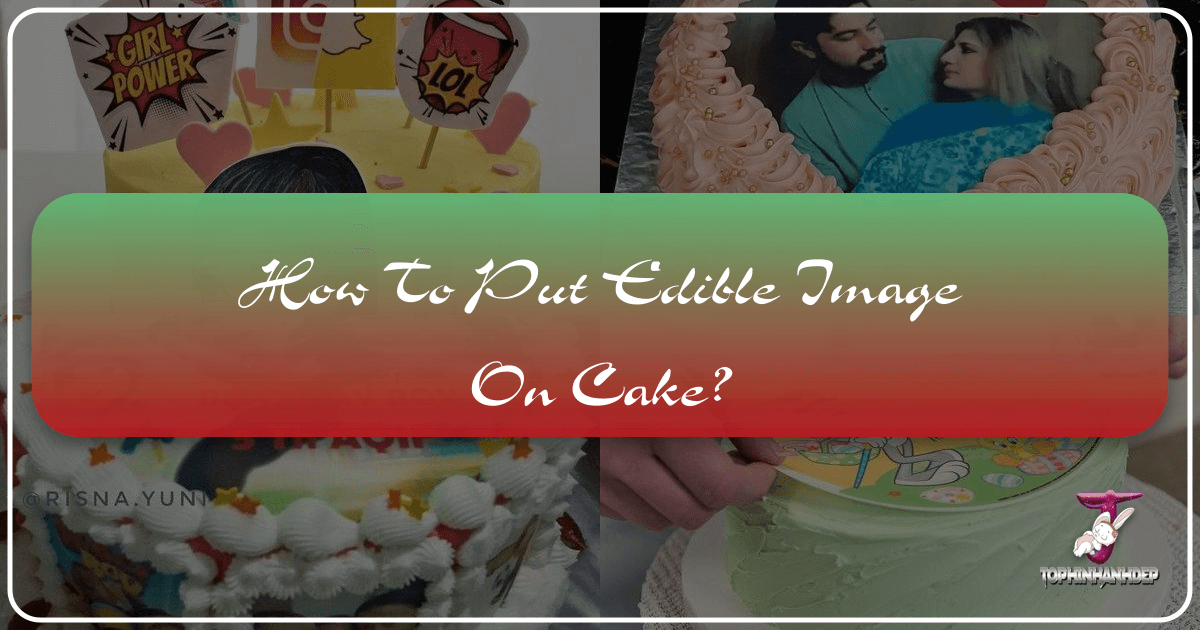
The art of cake decorating has evolved dramatically, transforming simple baked goods into personalized masterpieces. Among the most popular and impactful innovations is the edible image – a vibrant, custom design or photograph seamlessly integrated into your cake’s frosting. Whether celebrating a cherished memory, showcasing a beloved character, or presenting a sophisticated pattern, edible images offer an unparalleled way to add a unique visual flair. This guide will walk you through everything you need to know about edible images, from understanding what they are and where to source them, to the meticulous process of applying them flawlessly to your confectionery creation. We’ll also explore how a resource like Tophinhanhdep.com can elevate your edible image projects, offering inspiration and tools to ensure your cake’s visual elements are as stunning as they are delicious.

Understanding Edible Images and Their Origin
Edible images, often referred to as edible icing sheets, sugar sheets, frosting sheets, or edible paper, are at the forefront of personalized cake decoration. They provide a quick, professional, and visually striking way to customize cakes, cupcakes, cookies, and other sweet treats. Far from a passing trend, these decorative elements have become a staple for both professional bakers and enthusiastic home decorators looking to add that extra special touch.

What Exactly Are Edible Images?
At their core, edible images are designs or photographs printed using food-grade edible inks onto a special, thin layer of edible material. This material is most commonly a sugar-paste-based icing sheet. Unlike older methods that might have used rice paper or wafer paper, modern icing sheets offer superior print quality, producing more vivid colors and sharper details. They are smoother, more flexible, and integrate almost seamlessly with the cake’s frosting, becoming an actual part of the edible surface.
The key components are:
- Edible Paper (Icing Sheets): These are thin, flexible sheets primarily made from sugar paste. They come affixed to a non-edible backing material (usually a slightly stiff plastic or paper) for stability during handling and printing. Icing sheets are preferred for their ability to hold vibrant colors and their smooth texture, which contributes to a professional finish. While wafer paper (made from potato starch, water, and oil) is also edible, it tends to be more translucent and less vibrant, making icing sheets the go-to for photographic quality prints. Rice paper, a very early form of edible paper, generally doesn’t offer the high-quality print surface desired for detailed edible images.
- Edible Inks: These are specially formulated food-grade inks, composed of edible food colors. They are completely safe for consumption and are designed to work with specific edible printer systems to produce images that are as safe to eat as the cake itself.

Sourcing Your Edible Masterpiece
Acquiring an edible image can be done in several ways, catering to different levels of commitment and frequency of use. For the occasional baker, local services or online providers are excellent choices, while more dedicated decorators might invest in their own printing setup.
- Professional Printing Services: Many local bakeries, specialized cake decorating shops, and even some larger grocery store chains offer edible image printing services. This is a convenient option if you only need an edible image occasionally. You typically provide your image file, and they print it on an edible sheet for you. When using such a service, it’s wise to call ahead to confirm they offer edible printing and what image formats (e.g., .jpg, .png, .pdf) they accept.
- Online Custom Orders: Numerous websites, including artisan marketplaces and dedicated cake supply stores, allow you to upload your chosen image for custom edible print orders. These are then printed and shipped directly to your door. This option provides access to a wider range of sizes and shapes and can be a lifesaver if local options are limited.
- Printing at Home: For those who frequently incorporate edible images into their baking, investing in an edible image printer system can be a cost-effective and creatively empowering solution. This involves purchasing a dedicated edible printer (which cannot be used with standard inks once converted for edible printing), edible ink cartridges, and blank edible icing sheets. While the initial investment is higher, it offers ultimate flexibility for creating custom designs on demand.
Preparing Your Visuals with Tophinhanhdep.com’s Tools
Regardless of whether you print your edible image at home or order it from a service, the quality of your original image is paramount. This is where a resource like Tophinhanhdep.com truly shines, offering a suite of tools and inspiration to ensure your edible designs are of the highest possible standard.
Tophinhanhdep.com, known for its extensive collection of Images (including Wallpapers, Backgrounds, Aesthetic, Nature, Abstract, Sad/Emotional, and Beautiful Photography) and emphasis on Photography (High Resolution, Stock Photos, Digital Photography, Editing Styles), is an ideal starting point. You can find high-resolution images that will look crisp and clear when printed on an icing sheet, avoiding pixelation or blurriness.
Furthermore, Tophinhanhdep.com’s Image Tools category (Converters, Compressors, Optimizers, AI Upscalers, Image-to-Text) provides invaluable utilities for preparing your chosen image:
- High Resolution: Always start with the highest resolution image available. A low-resolution image will inevitably lead to a blurry or pixelated edible print. Tophinhanhdep.com emphasizes “High Resolution” photography, making it an excellent source for quality base images.
- Optimizers and Compressors: While high resolution is good, sometimes file sizes can be unwieldy. Tophinhanhdep.com’s optimizers can help reduce file size without significant loss of quality, which can be useful when uploading to printing services.
- AI Upscalers: If your desired image isn’t perfectly high-res, Tophinhanhdep.com’s AI Upscalers can be a game-changer. These tools can intelligently enhance the resolution of an image, making it suitable for printing onto an edible sheet with far greater clarity than the original. This is particularly useful for old family photos or beloved but low-quality digital images.
- Editing Styles: Before printing, you might want to adjust colors, contrast, or apply a specific filter to match your cake’s aesthetic. Tophinhanhdep.com’s focus on “Editing Styles” and “Digital Photography” concepts aligns perfectly with preparing an image that will look its best on your cake. For instance, adjusting a “Nature” image from Tophinhanhdep.com to match a specific green frosting, or refining an “Abstract” pattern for vibrant clarity.
- Visual Design Inspiration: Beyond tools, Tophinhanhdep.com offers Visual Design (Graphic Design, Digital Art, Photo Manipulation, Creative Ideas) and Image Inspiration & Collections (Photo Ideas, Mood Boards, Thematic Collections, Trending Styles). These sections can spark ideas for your edible image design, helping you choose the perfect “Aesthetic” or “Thematic Collection” image that complements your cake’s occasion. Whether you need a calming “Nature” background for a baby shower cake or a dynamic “Abstract” pattern for a modern design, Tophinhanhdep.com is a rich resource.
By leveraging Tophinhanhdep.com for both image acquisition and preparation, you ensure that the visual foundation of your edible cake topper is impeccable, setting the stage for a truly stunning final product.
Essential Preparation for Flawless Application
Applying an edible image is a delicate process that requires careful preparation to achieve a smooth, professional finish. The way you store your image, the type of cake and frosting you use, and the tools you have at hand all play crucial roles in the success of your edible design.
Storing Your Edible Prints
Proper storage of your edible image is critical for maintaining its quality and ensuring it peels cleanly from its backing.
- Keep it Sealed: When you receive your edible sheet, it will come on a backing material (a slightly stiff, non-edible plastic or paper) and typically enclosed in a sealed plastic bag or cover. This packaging is essential to prevent the sheet from drying out or absorbing too much moisture.
- Room Temperature and Dark Place: Store the edible image flat in its sealed bag at room temperature, in a cool, dark place. Avoid refrigeration, as the moisture and temperature fluctuations inside a fridge can cause the sheet to become sticky, difficult to peel, or even bleed colors.
- Avoid Humidity and Direct Sunlight: High humidity can cause the icing sheet to become overly moist and sticky, making it challenging to remove from the backing and prone to bleeding once applied. Conversely, direct sunlight or excessive heat can dry out the sheet too much, making it brittle and susceptible to cracking, and can also cause the edible colors to fade. In very humid conditions, it’s advisable to use the icing image as quickly as possible after receiving it. When stored correctly, most edible images have a shelf life of around 6-12 months, but for optimal results and ease of handling, it’s best to use them within a few weeks.
Choosing the Right Canvas: Cake Types and Frostings
Edible images are versatile and can be applied to a variety of cake types and frostings, but certain combinations yield the best results. The key is to provide a stable, relatively firm, and not overly wet surface for the icing sheet to adhere to.
- Buttercream and Fondant: These are widely considered the best surfaces for edible images.
- Buttercream: When applying to buttercream, it’s crucial that the buttercream has developed a “skin” – meaning it’s firm and not wet to the touch. This prevents the edible image from absorbing too much moisture too quickly, which can lead to bubbling or bleeding. A thin coating of corn syrup or piping gel brushed onto the back of the edible image (or directly onto the chilled buttercream) can help it adhere smoothly and prevent air bubbles.
- Fondant/Sugar Paste: Fondant-covered cakes provide an excellent, smooth, and dry surface for edible images. The icing sheet adheres beautifully to fondant, creating a seamless look. Edible glue or a thin layer of piping gel on the fondant surface (or back of the image) aids adhesion. A common tip is to order your edible image slightly smaller than your cake or fondant plaque to allow for a border.
- Cautions with High-Moisture Frostings: While it’s possible to use edible images on frostings like whipped cream, non-dairy frosting, or cream cheese frosting, extreme caution is advised. These frostings have a high moisture content, which can cause the edible image to absorb water too quickly, leading to colors bleeding, bubbling, or even dissolving the sheet.
- If using these frostings, apply the edible image as close to serving time as possible (ideally within 1-2 hours) to minimize moisture absorption.
- A useful technique for high-moisture frostings is to create a “backing plaque” of rolled-out fondant, about the same size and shape as your edible image. Apply the edible image to this fondant plaque first using edible glue or corn syrup, let it set, and then place the entire plaque onto your whipped cream or cream cheese frosted cake. This acts as a barrier, protecting the edible image from excess moisture.
- Other Surfaces: Edible images can also be applied to royal icing (on cookies), chocolate ganache, flat hard candies, and even dipped Oreos. For these surfaces, a thin layer of corn syrup, edible glue, or piping gel is typically brushed onto the back of the image or the surface for adhesion.
- Dark Frosting Considerations: Since edible icing sheets are thin and somewhat translucent, a very dark frosting underneath (like dark chocolate ganache or intensely colored buttercream) might slightly show through and affect the vibrancy or true colors of your edible image. If you have a dark cake base, consider applying the edible image to a thin piece of white fondant first, then placing the fondant-backed image onto the dark frosting.
Gathering Your Tools
Before you begin the application process, ensure you have the following tools ready:
- Sharp Scissors or an X-Acto Knife: For precise cutting of your edible image.
- Clean, Dry Hands: Essential for handling the delicate edible sheet without leaving fingerprints or introducing moisture.
- Damp Brush (Optional and with caution): Some guides suggest lightly dampening the cake surface; others advise against wetting the topper directly. If used, it should be barely damp to avoid over-wetting.
- Fine Mist/Spray Bottle (Optional): Again, for very light moistening of a dry cake surface if necessary.
- Edible Glue, Piping Gel, or Corn Syrup: Your adhesive of choice, applied sparingly.
- Fondant Smoother or Clean, Flat Tool: For gently pressing out air bubbles and ensuring good contact.
- Paper Towels: To absorb any accidental excess moisture or to use as a buffer when smoothing.
The Step-by-Step Guide to Applying Your Edible Image
With your image prepared and your cake ready, it’s time for the main event: applying the edible image. This process requires patience and a gentle touch, but the results are incredibly rewarding.
Precision Cutting and Backing Removal
The first crucial steps involve accurately sizing your image and carefully separating it from its non-edible backing.
- Cut to Size and Shape: With clean, dry hands, use sharp scissors or an X-Acto knife to cut your edible image into the desired shape and size. Do this before removing the backing paper, as the backing provides stability and prevents tearing. If using an X-Acto knife, perform the cut on a clean, dry cutting mat. Many edible image sheets come with perforations or pre-cut shapes, making this step easier.
- Prepare for Backing Removal: Edible images typically adhere quite well to their backing. To make removal easier, especially in humid conditions, take the sheet out of its sealed bag and let it rest at room temperature for about 10-20 minutes to slightly dry out.
- The Freezer Trick: If the image is still sticking firmly, a common and effective technique is to place the entire sheet (with backing) in the freezer for about 15-20 seconds. The slight temperature change can make the icing sheet contract just enough to separate cleanly from the backing. Do not leave it in for too long, as it can become brittle.
- Peeling the Backing: After the freezer trick (or if it peels easily without it), place the edible topper face down on a very clean, dry surface or plastic cutting board. Starting at a corner, gently pull the backing sheet away from the image, rather than trying to peel the image off the backing. This minimizes stretching and tearing of the delicate icing sheet. If you still have trouble, try gently pulling the backing sheet over the sharp edge of a table or countertop to “pop” the image off.
Adhering the Image with Care
Once the backing is removed, the edible image is ready for its place on the cake. This is where a light touch and precision are key.
- Prepare the Cake Surface: Ensure your cake’s frosted surface is smooth and level. If using buttercream, it should be firm and “crusted” over. For fondant, ensure it’s smooth and dry. If the cake’s surface is very dry (e.g., a store-bought cake that has sat for a while), you can very lightly dampen it with a barely damp pastry brush or a fine mist of water. Pat away any excess moisture with a kitchen towel. However, be extremely cautious not to over-wet the cake, and never wet the edible image itself, as this will cause the colors to run.
- Apply Adhesive: Brush a very thin, even coat of edible glue, piping gel, or corn syrup onto the back of the edible image, or directly onto the part of the cake where the image will be placed. Do not use water as an adhesive, especially on the edible image itself. The adhesive should be minimal; too much can make the image slide or bleed.
- Position and Place: Holding the edible image gently by its sides (to avoid visible fingerprints on the printed surface), carefully center and align it over your desired placement on the cake. This is often the trickiest part, as repositioning an edible image can be difficult without damage.
- Smooth Out Air Bubbles: Starting from the center of the image, gently press it onto the cake, working your way outward towards the edges with the palm of your hand, a fondant smoother, or a clean, dry paper towel. This method helps to push out any trapped air bubbles from beneath the image. Take your time to ensure the image is flat and free of wrinkles. If a stubborn air bubble appears, you can use a very sharp pin to poke a tiny hole and gently press the air out, though this might leave a tiny imperfection.
- Finishing Touches: Once applied, you can add a decorative buttercream, royal icing, or fondant border around the edible image to give it a finished, polished look and help seal the edges.
Troubleshooting Common Application Challenges
Even with careful preparation, issues can arise. Knowing how to troubleshoot can save your cake!
- Image Sticking to Backing: As mentioned, the freezer trick (15-20 seconds) is usually effective. If not, try pulling the backing over a sharp edge. As a last resort, if living in very humid conditions, you can place the sheet in a very cool oven (lowest temperature, around 100°F or with just the fan on, no heat) for 5-10 minutes to dry it out slightly, then let it cool completely before attempting to peel. Do not let it dry out completely, as it will become brittle.
- Air Bubbles or Wrinkles: Gentle smoothing from the center outwards with a fondant smoother or dry fingers is usually enough. If they persist, a pin prick can release trapped air, but be delicate.
- Tearing: If you accidentally tear the edible image slightly, don’t panic. Very gently rub the torn area with a dry finger. The icing sheet is sugar-based and can sometimes “merge” back together, making minor tears disappear after an hour or so as the sugar settles.
- Color Bleeding: This is almost always due to excessive moisture. To prevent it, ensure your cake surface is not too wet, and apply the image as close to serving time as possible if using high-moisture frostings. If possible, avoid refrigerating your decorated cake with an edible image, especially for extended periods. If refrigeration is unavoidable (e.g., in summer), place it in an airtight container to minimize moisture exposure and apply the image at the last minute.
Beyond Edible Prints: Creative Alternatives and Design Inspiration
While edible images offer an incredible convenience, there are times when an edible print isn’t available or suitable. Additionally, the process of selecting and preparing your image can be a creative journey in itself.
Crafting a Non-Edible Image Plaque
What if you don’t have an edible image printer, or local services, and your event is too soon for an online order? There’s a clever technique to incorporate non-edible images onto your cake, making them a decorative centerpiece. This method uses a regular paper print mounted on an edible plaque.
- Print Your Image: Use a standard home inkjet printer to print your desired cartoon character, photograph, or design onto normal paper. Ensure it’s a high-quality print. Resources from Tophinhanhdep.com, offering “High Resolution” images and diverse “Images” like “Aesthetic” or “Beautiful Photography,” are perfect for this step, as the crispness of the original print will directly impact the final look.
- Create a Fondant Plaque: Roll out a piece of fondant (white is preferred for a clean background) to approximately 2mm thickness. This will serve as your edible “plaque.”
- Cut the Plaque to Size: Place your pre-cut paper image onto the rolled-out fondant. Using a sharp knife or X-Acto knife, carefully cut the fondant to match the shape and size of your paper image.
- Apply Edible Adhesive: Using a paintbrush, lightly apply edible glue (such as gum-tex or tylose powder mixed with a little water to form a thick paste) to the fondant plaque. Do not use water here, as it can be detrimental. Apply the glue sparingly, focusing on the edges and a few spots in the middle, dabbing off any excess.
- Attach the Paper Image: Carefully place the printed paper image onto the glued fondant plaque and smooth it out gently, ensuring good contact and no air bubbles.
- Protect the Image (Optional but Recommended): To further protect the paper print from moisture and the cake’s icing, you can laminate the paper image before attaching it to the fondant, or carefully apply a clear edible glaze over the finished plaque. The crucial goal is to keep the non-edible paper away from direct contact with the cake’s moist elements.
- Placement on Cake: Once the plaque is dry and stable, it can be placed onto your frosted cake. This method creates a visually striking topper that uses a non-edible print but is presented on an edible base. This technique is often seen in examples using “Visual Design” or “Creative Ideas” for cake decoration.
Unleashing Creativity with Tophinhanhdep.com
Beyond providing raw materials and tools, Tophinhanhdep.com is a fantastic hub for Image Inspiration & Collections (Photo Ideas, Mood Boards, Thematic Collections, Trending Styles). When conceptualizing your next cake design, delve into its offerings:
- Mood Boards and Thematic Collections: Use Tophinhanhdep.com to gather images for a mood board, helping you define the overall aesthetic and color palette of your cake. Whether it’s a birthday theme requiring “Sad/Emotional” undertones for a memorial cake, or vibrant “Abstract” patterns for a modern celebration, these collections provide a wealth of options.
- Trending Styles: Stay current with design trends by exploring Tophinhanhdep.com’s “Trending Styles.” This could influence not just the image you choose but also the overall cake decorating style, ensuring your creation is both beautiful and contemporary.
- Creative Ideas: For those seeking unique approaches, Tophinhanhdep.com’s “Creative Ideas” within “Visual Design” can inspire how you integrate your edible image. Perhaps a collage of “Beautiful Photography” images for an anniversary cake, or “Digital Art” elements that transform a simple dessert into a gallery-worthy piece.
The possibilities are truly endless when you combine the practical application of edible images with the vast creative resources offered by Tophinhanhdep.com.
In conclusion, putting an edible image on a cake is a process that blends culinary skill with visual artistry. By understanding the nature of edible prints, preparing them meticulously using tools and inspiration from platforms like Tophinhanhdep.com, and applying them with care, you can transform any ordinary cake into an extraordinary, personalized celebration centerpiece. So go ahead, unleash your creativity, and let your cakes tell a delicious visual story.