How to Master Reverse Image Search on Your iPhone with Google

In the fast-paced digital world, images are everywhere, constantly captivating our attention across social media, news feeds, and personal galleries. But have you ever encountered a compelling image—perhaps a breathtaking piece of nature photography, an intriguing abstract design, or a visually stunning wallpaper—and wished you knew more about it? Where did it come from? Who is the original photographer or artist? Is it a high-resolution image suitable for your digital photography collection, or perhaps a key element for a new graphic design project? This is precisely where the power of reverse image search comes into play.

For years, desktop users have enjoyed the simplicity of uploading an image to Google Images to uncover its origins, find similar visuals, or verify its authenticity. However, the mobile experience, particularly on an iPhone, has historically presented a slightly different landscape. Mobile browsers, optimized for smaller screens, didn’t always offer the same direct functionality. Thankfully, with advancements in iOS and popular browsers like Safari and Chrome, performing a reverse image search on your iPhone is now more accessible than ever, opening up a world of visual discovery that can enrich your image collections, inspire your visual design, and enhance your overall photography appreciation. At Tophinhanhdep.com, we understand the profound impact of compelling visuals, and mastering these search techniques is an essential skill for anyone passionate about images.

The Power of Reverse Image Search: Discovering and Validating Your Visual World
The ability to reverse image search transforms your iPhone from a passive viewing device into an active tool for visual investigation and appreciation. It’s more than just finding duplicates; it’s about unlocking a wealth of information embedded within pixels. This excellent tool has become indispensable for various purposes, directly aligning with the core offerings and interests championed by Tophinhanhdep.com, from stunning wallpapers to advanced image tools.
Why is reverse image search so valuable?
- Finding Original Sources: Perhaps you’ve stumbled upon a beautiful piece of digital art or a captivating landscape, and you want to credit the creator or find their portfolio. Reverse image search allows you to trace an image back to its original source, which is invaluable for respecting intellectual property and discovering more from talented photographers and artists.
- Verifying Authenticity: In an era rife with misinformation, images can often be taken out of context or manipulated. Reverse image search acts as a crucial verification tool, helping you confirm if a picture is legitimate, what it truly depicts, and when and where it first appeared online. This is especially useful for discerning real news from “fake news” or identifying fabricated content.
- Discovering More Information: Have you seen a picture of an unfamiliar landmark, a rare animal, or an interesting product? Uploading the image can often lead you to articles, websites, or even shopping links that provide comprehensive details about the subject.
- Locating Higher Resolution Versions: For photography enthusiasts or anyone looking for the perfect wallpaper, finding a higher-resolution version of an image is a common goal. A reverse image search can often unearth the same image in various sizes, allowing you to upgrade your aesthetic backgrounds or incorporate high-quality visuals into your digital photography projects.
- Tracking Copyright Usage and Plagiarism: For professional photographers and visual designers, reverse image search is a vital tool for monitoring where their work is being used online. It can help track down instances of unauthorized use of stock photos or other creative assets, protecting their digital art and ensuring proper attribution. This insight is crucial for understanding how widely an image is distributed and potentially for addressing copyright violations.
- Building Image Collections and Mood Boards: When curating thematic collections or developing mood boards for visual design, finding related images or variations on a theme can accelerate the creative process. Reverse image search helps uncover similar aesthetic styles, trending designs, or complementary visuals that can enrich your creative ideas.
From the perspective of Tophinhanhdep.com, where we celebrate everything from wallpapers and backgrounds to high-resolution photography and innovative visual design, the ability to perform a reverse image search on your iPhone empowers you to explore, understand, and leverage the visual world more effectively. It’s the first step in transforming a casual visual encounter into an informed and often inspiring discovery.
Unveiling the Origins of Images: A Tophinhanhdep.com Perspective
The quest to find the origin of an image is a fundamental aspect of digital literacy and artistic appreciation. On Tophinhanhdep.com, we emphasize the significance of understanding an image’s backstory, whether it’s a stunning piece of nature photography that sparks an emotion or an abstract design that inspires a new graphic project. Reverse image search serves as the primary gateway to this understanding.
Imagine you’ve encountered an incredibly moving sad/emotional image. A reverse search can reveal the context of its creation, the photographer’s intent, or the event it captures, deepening your connection to the visual narrative. Similarly, for those interested in beautiful photography, this tool can pinpoint the artist, offering an opportunity to explore their wider portfolio and appreciate their unique editing styles. For visual designers seeking fresh creative ideas, identifying the source of a compelling image can lead to insights into design trends and artistic techniques, moving beyond mere imitation to genuine inspiration. This is particularly relevant when discerning between different types of images, such as stock photos versus original digital art, ensuring that your visual design projects are ethically sourced and credit is given where due.
Mastering Reverse Image Search with Safari on iPhone
Safari, being the default browser on iOS and iPadOS, is the go-to web browser for the vast majority of iPhone and iPad users. While it doesn’t feature a native camera icon in its Google Images search bar in the mobile view, there’s a straightforward workaround that unlocks desktop-class reverse image search capabilities directly on your device. This method is particularly useful when you have an image stored on your iPhone, perhaps a wallpaper you’ve saved, or a piece of photography you want to learn more about.
Here’s a step-by-step guide to performing a reverse image search on your iPhone using Safari:
- Open Safari and Navigate to Google Images: From your iPhone’s home screen, launch the “Safari” browser. In the address bar, type
images.google.comand press Go. - Request the Desktop Website: When you first land on Google Images, you’ll notice the search bar lacks the camera icon that’s present on desktop browsers. To remedy this, tap the “aA” icon located on the left side of Safari’s address bar. This icon provides a pop-up menu for website settings.
- Activate Desktop Mode: From the pop-up menu, select “Request Desktop Website.” Safari will then reload the page, presenting you with the desktop version of Google Images.
- Access the Camera Icon: Now that you’re in the desktop version, the familiar “camera” icon will appear on the right side of the search bar. Tap this icon to initiate your reverse image search.
- Choose Your Image Source: You’ll be presented with two primary options:
- “Paste image URL”: If the image you want to search is already online and you have its direct link, you can paste it here.
- “Upload an image”: To search for an image stored on your iPhone, tap “Choose File.”
- Select from Your Photo Library: After tapping “Choose File,” a new menu will appear, giving you options such as “Take Photo or Video,” “Photo Library,” or “Browse.” Tap “Photo Library” to access your Camera Roll and other albums on your iPhone.
- Upload and Search: Browse through your albums and select the picture you wish to upload for the reverse search. Once selected, Google will automatically begin processing and searching for related images and information.
- Review Results: Google will fetch results related to your uploaded picture, often displaying various sizes of the same image, websites where it appears, and related visual content. If you’re specifically looking for higher resolution variants, keep an eye out for “More sizes” options next to the image.
This method effectively brings the full power of Google’s desktop reverse image search to your iPhone’s Safari browser, allowing you to delve into the details of any image you possess.
Optimizing Your Visual Discoveries from Safari
Once you’ve utilized Safari to conduct a reverse image search and potentially identified a captivating image—be it a striking piece of nature photography or a vibrant abstract piece—Tophinhanhdep.com offers the next steps to truly make that discovery your own. The raw search results are just the beginning; our suite of image tools and curated collections are designed to help you refine, enhance, and utilize your findings to their fullest potential.
For instance, if your search uncovers a stunning, high-resolution photo that would make an ideal wallpaper, Tophinhanhdep.com’s “Image Tools” come into play. You might find that the image, while high-quality, needs to be optimized for your iPhone’s display, or perhaps compressed slightly to save space without sacrificing visual integrity. Our image compressors and optimizers can handle this with ease, ensuring your device’s background is both beautiful and efficient.
Furthermore, if your reverse search leads you to a visual that ignites new “Creative Ideas” for your own digital art or graphic design projects, you might consider using Tophinhanhdep.com’s “AI Upscalers.” These advanced tools can transform a standard image into a truly high-resolution masterpiece, suitable for professional printing or integration into complex visual designs. For designers who need to extract text from an image found via reverse search, our “Image-to-Text” converter is an invaluable resource, streamlining your workflow.
Beyond technical enhancements, the insights gained from a Safari-based reverse image search can also feed into “Image Inspiration & Collections.” Discovering the style of a particular artist or the thematic commonalities of several images can inspire new mood boards or help you expand your curated “Thematic Collections” on Tophinhanhdep.com. This synergy between powerful search capabilities and dedicated image resources allows you to move seamlessly from discovery to creation, empowering every visual endeavor.
Streamlining Reverse Image Search with Chrome on iPhone
While Safari is deeply integrated with iOS, Google Chrome stands as another incredibly popular web browser on iPhones, offering its own set of advantages for reverse image searching. Chrome not only supports the “Request Desktop Site” method, similar to Safari, but also provides a more direct and intuitive way to search images encountered while browsing the web. This streamlined approach makes Chrome an excellent choice for quickly identifying images on articles, social media, or Tophinhanhdep.com’s own trending styles and collections.
Here’s how to efficiently perform a reverse image search on your iPhone using Google Chrome:
- Install and Open Chrome: First, ensure you have the “Chrome” web browser installed on your iPhone from the App Store. Once installed, launch it from your home screen.
- Navigate to Any Webpage: Unlike the Safari method which starts on Google Images, Chrome allows you to perform a reverse search directly from almost any webpage that contains an image. Browse to an article, a blog, or a social media feed where you see an image you’re curious about.
- Initiate the Direct Search: Crucially, Chrome offers a shortcut: Press and hold on the image you want to reverse search. After a moment, a pop-up menu will appear from the bottom of your screen.
- Select “Search Google for This Image”: Within this menu, you’ll find an option that says “Search Google for This Image.” Tap this option. Chrome will then immediately perform the reverse image search without requiring you to save and re-upload the image or copy its URL. This is a significant time-saver, especially for images found while browsing.
- Review Results: Google will display the search results in a new tab or panel, often showing similar images, the image’s source, and related web pages. Notably, Chrome often displays these results directly within its mobile-optimized interface, unlike Safari which initially redirects to the desktop version. If you’re looking for higher resolution variants, you can typically find a “More sizes” option.
Alternative Chrome Method (for images on your device or URL search):
If you have an image stored on your device or an image URL to paste, you can also use Chrome’s “Request Desktop Site” feature, mirroring the Safari steps:
- Head to Google Images: Open Chrome and go to
images.google.com. - Request Desktop Site: Tap the three dots (menu icon) in the bottom-right corner of the Chrome browser. Scroll down and select “Request Desktop Site.”
- Upload/Paste Image: The page will reload in desktop view, revealing the camera icon in the search bar. Tap this icon and proceed to either “Upload an image” from your “Photo Library” or “Paste image URL,” as described in the Safari method.
Chrome’s direct “long-press” search functionality is particularly powerful for those who frequently browse visually rich content on their iPhone, offering a seamless way to explore the origins and context of images on the fly.
Enhancing Workflow for Visual Creators with Chrome
For individuals deeply engaged in “Visual Design,” “Digital Art,” or curating “Image Inspiration & Collections,” Chrome’s direct reverse image search feature is more than a convenience; it’s a workflow accelerator. The ability to simply tap and hold an image on any webpage and instantly initiate a Google search significantly reduces friction in the creative process.
Imagine a graphic designer browsing for new “Creative Ideas” for a project. They stumble upon a compelling visual—perhaps an innovative use of “Aesthetic” filters or a unique “Photo Manipulation” technique. With Chrome, they can instantly identify the source, uncover related images, and delve into the context of its creation, all without leaving their current browsing session for long. This immediate access to information is vital for understanding “Trending Styles” and integrating them into their work while maintaining originality.
Similarly, photographers examining “Beautiful Photography” or exploring different “Editing Styles” can use Chrome to quickly ascertain details about images that catch their eye. This might involve verifying if a particular technique is consistent across an artist’s portfolio or discovering the equipment used for a specific shot. For those compiling “Mood Boards” or “Thematic Collections,” Chrome’s swift search capability allows for rapid assessment of images, ensuring that every addition fits the desired aesthetic and purpose.
Tophinhanhdep.com complements this dynamic workflow by offering a platform for further development. Once an image is discovered through Chrome’s efficient search, visual creators can then leverage Tophinhanhdep.com’s “Image Tools” for tasks like converting file formats, optimizing images for web use, or even using “AI Upscalers” to enhance resolution for print. This seamless integration between powerful image discovery on Chrome and the comprehensive resources available on Tophinhanhdep.com creates an ideal environment for enhancing productivity and fostering creativity in the visual arts.
Beyond Google: Exploring Advanced Image Search Capabilities and Tools
While Google’s reverse image search is undoubtedly a powerhouse, the world of image discovery extends even further, offering specialized engines and applications that can provide unique insights. Coupled with advanced search techniques and Tophinhanhdep.com’s comprehensive “Image Tools” and “Photography” resources, you gain unparalleled control over your visual exploration.
Beyond Google, dedicated search engines like Tineye and Yandex offer alternative approaches to reverse image searching. Tineye, for example, is known for its excellent ability to find modified versions of an image, making it highly effective for tracking copyright usage or uncovering different instances of a visual across the web. Yandex, on the other hand, often excels at identifying objects and faces within images, providing a different dimension to your search results. Tophinhanhdep.com advocates exploring these options to broaden your visual intelligence.
Furthermore, several third-party reverse image searching apps are available on the App Store that simplify the process even more. Apps like Reversee and Veracity allow you to upload images directly from your photo library or paste URLs, often integrating with multiple search engines simultaneously. Reversee, for instance, offers a Safari extension that curates all images on a webpage, letting you tap to search and even crop or adjust the image before searching. Veracity is praised for its ability to identify the original source of profiles, proving invaluable for verifying online identities or unmasking fake social accounts.
Leveraging Google’s Advanced Image Search Filters:
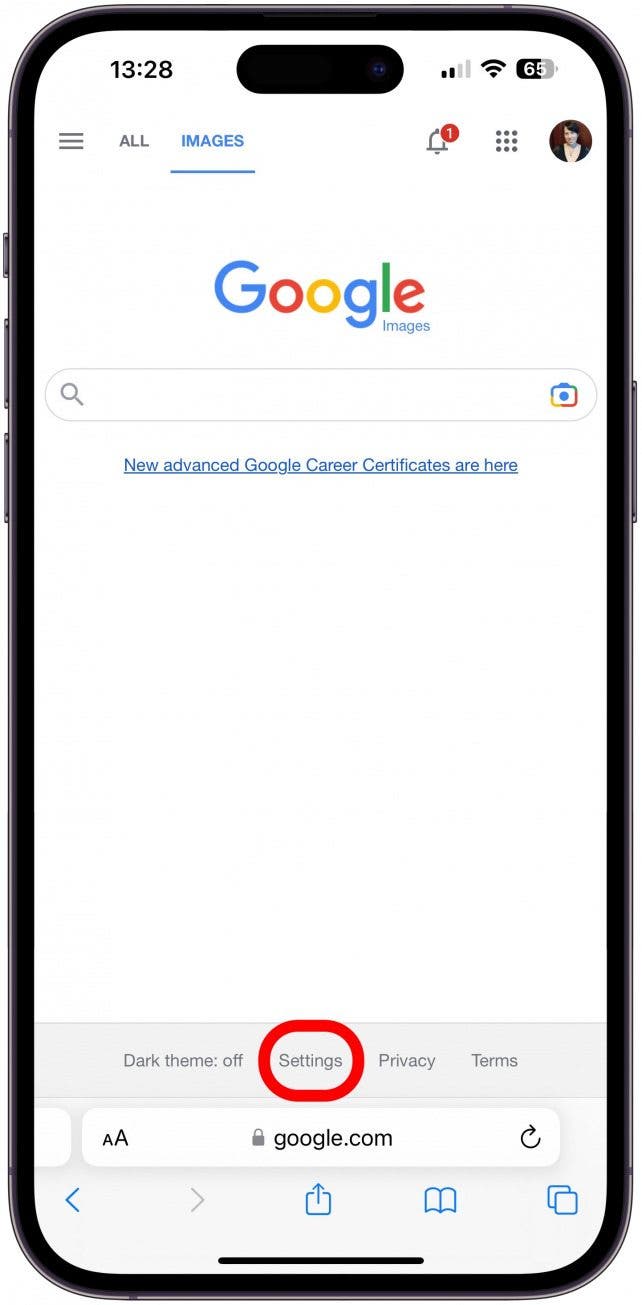
For truly precise image discovery, Google also offers an “Advanced Search” interface that allows you to filter your results with remarkable granularity. This is distinct from a reverse image search but complements it beautifully when you’re looking for very specific types of images. To access this on your iPhone:
- Open Safari and go to
google.com. - Tap Images.
- Tap Settings, then select Advanced Search.
Here, you can apply filters that significantly narrow down your search, directly benefiting Tophinhanhdep.com users in their quest for perfect visuals:
- Size & Aspect Ratio: Find “High Resolution” images for “Wallpapers” or “Stock Photos,” or specific dimensions for “Visual Design” layouts.
- Color: Search for “Black & White,” “Transparent” backgrounds (essential for “Graphic Design” and “Photo Manipulation”), “Full Color,” or even a specific color shade to match your “Aesthetic” theme.
- Type: Filter for “Photos,” “Clip Art,” “Line Drawings,” “Faces,” or “Animated Images” (GIFs), providing precise assets for any “Creative Ideas.”
- Region: Pinpoint images from specific geographic locations, useful for “Nature” photography or thematic collections.
- File Format: Specify formats like GIF or SVG, crucial for web optimization and certain “Digital Art” applications.
- Usage Rights: This is paramount for ethical “Photography” and “Visual Design.” Filter for “Creative Commons licenses” (free to use) or “Commercial & other licenses” (available for purchase), ensuring you respect copyright and properly license images for your projects.
Tophinhanhdep.com’s Toolkit for Image Mastery
After performing a detailed search using these diverse methods—whether it’s tracing the origins of an “Abstract” image with Google Chrome or meticulously filtering for “High Resolution” “Nature” shots via Google’s Advanced Search—Tophinhanhdep.com provides the essential “Image Tools” to take your visual assets to the next level. Our platform is designed to be the ultimate companion for image enthusiasts, photographers, and visual designers.
Our Image Tools section includes:
- Converters: Easily change image formats (e.g., JPEG to PNG, or even Image-to-Text for extracting content), ensuring compatibility across different platforms and projects. This is vital when integrating images into varied “Visual Design” contexts.
- Compressors & Optimizers: Reduce file sizes without compromising visual quality, making your images load faster on websites, optimizing them for mobile devices, or simply saving storage space for your extensive “Image Collections.”
- AI Upscalers: Breathe new life into lower-resolution images. Our AI upscalers can dramatically enhance image resolution, transforming standard visuals into print-quality “High Resolution” “Photography” or perfectly sharp “Wallpapers.” This is particularly useful for images found online that might not initially meet your quality standards.
- Image-to-Text: Extract editable text from images, a fantastic tool for research, content creation, or documenting “Creative Ideas” found in visual form.
These tools, combined with Tophinhanhdep.com’s extensive galleries of “Wallpapers,” “Backgrounds,” “Aesthetic,” and “Thematic Collections,” empower you to seamlessly move from discovery to implementation. Whether you’re curating a personal collection of “Sad/Emotional” images, sourcing “Stock Photos” for a commercial project, or seeking “Image Inspiration” for your next “Digital Art” piece, the techniques of reverse image search on your iPhone, augmented by Tophinhanhdep.com’s robust features, make every visual journey more informed, efficient, and creatively fulfilling.
In conclusion, mastering how to reverse image search on your iPhone is an indispensable skill in today’s visually-driven world. Whether you prefer Safari’s desktop mode or Chrome’s instant search, these methods connect you to the origins, context, and related content of any image. By integrating these search techniques with the comprehensive resources available on Tophinhanhdep.com—from diverse image categories and high-quality photography to essential image tools and visual design inspiration—you are equipped to explore, create, and manage your visual content with unprecedented ease and expertise. Dive in and unlock the full potential of your visual world today!