How to See Old Google Earth Images: A Journey Through Time with Tophinhanhdep.com
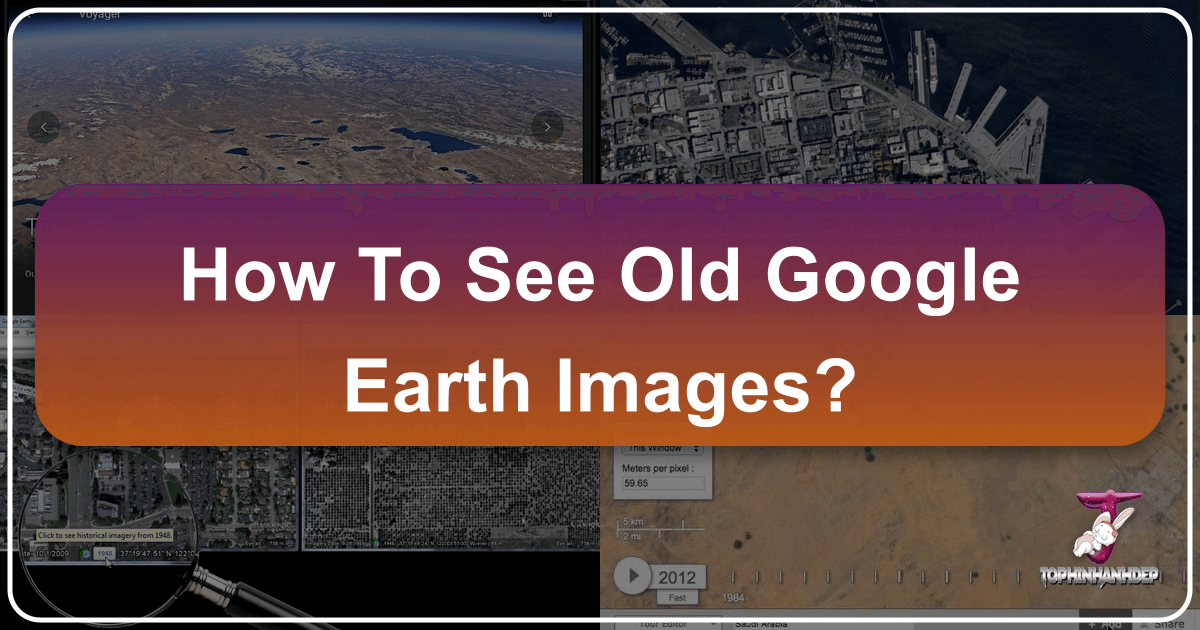
The world is a constantly evolving tapestry, and capturing its changes over time offers a fascinating glimpse into history, development, and the profound impact of human and natural forces. Imagine being able to revisit your childhood home decades ago, witness the growth of bustling metropolises, or observe the dramatic shifts in natural landscapes. Google Earth and Google Maps provide this remarkable capability, offering a window into the past through their extensive archives of historical imagery. At Tophinhanhdep.com, we understand the power of visual storytelling and the desire to explore, appreciate, and utilize high-quality images. This guide delves into the methods for accessing these historical visuals and how Tophinhanhdep.com can enhance your journey through time, turning nostalgic moments and geographical insights into stunning visual assets for any purpose.
Whether you’re a curious individual, a historian, a digital artist, or simply someone looking for unique visual inspiration, the historical imagery offered by Google’s platforms is an invaluable resource. From high-resolution satellite views to immersive Street View panoramas, these archives enable you to compare, analyze, and even commemorate past moments. Tophinhanhdep.com complements this exploration by providing tools and inspiration to transform these historical snapshots into captivating wallpapers, graphic design elements, or even raw material for digital art projects.
Unearthing the Past: Google Earth Pro for Satellite Imagery

For a comprehensive historical perspective from an aerial and satellite viewpoint, Google Earth Pro is the definitive tool. While Google Earth has a web-based version, the “Pro” desktop application, surprisingly, remains free and offers the most robust features for delving into its vast historical archives. This allows you to observe topographical changes, urban expansion, and environmental shifts over potentially many decades, making it a treasure trove for anyone interested in visual documentation of change.
Installation and Initial Navigation
The first step in your historical journey is to install the Google Earth Pro application on your computer. You can easily download it from Google’s official Earth website. Don’t be deterred by the “Pro” designation; it’s completely free for PC and Mac users, offering a more powerful experience than its web counterpart.

Once installed, launch the Google Earth Pro application. Your screen will display a globe, inviting you to explore. To begin your historical investigation, use the search box located in the upper-left corner of the interface. Input the specific location you wish to examine – this could be a city, a street address, or a well-known landmark. As you type and click ‘Search’, Google Earth Pro will swiftly transport you to that designated area, initially presenting you with the most recent and highest-resolution imagery available.

Upon arrival at your chosen location, you might find the initial view to be too broad or too distant for detailed observation. Utilize the vertical navigation bar situated on the right side of the map to adjust your zoom level. Clicking the plus (+) button will allow you to zoom in, providing increasingly granular detail, while the minus (-) button zooms out for a wider perspective. Continue adjusting until you achieve the desired level of detail, allowing the imagery to fully render. Once rendered, you’ll see a clear, vivid representation of the location as it appears in the most current available data. The navigation controls also allow you to pan and tilt the view, offering diverse perspectives of the site.
Activating and Manipulating the Historical Timeline
The true magic of Google Earth Pro for historical exploration lies in its “Historical Imagery” feature. To activate this, navigate to the View menu in the header menu bar at the top of your screen. From the dropdown options, select Historical Imagery. Alternatively, you can often find a prominent clock icon in the top toolbar, which serves as a quick toggle for this feature.
Upon activation, a transparent blue time-lapse bar will materialize in the upper-left corner of your map interface. This intuitive bar is your gateway to the past. It features a horizontal scroll slider that represents a timeline from the earliest available imagery to the most current. Moving this slider to the left allows you to regress through time, instantly updating the map’s visual to reflect how the location appeared in previous years. Each movement of the slider will subtly (or dramatically) transform the landscape before your eyes. You might observe buildings that no longer stand, undeveloped land that is now dense with urban structures, or coastline alterations due to natural erosion or human intervention. The precise day, month, and year of each image capture are typically displayed directly within the slider, providing crucial context for your historical observations. It’s important to note that the depth and frequency of available historical imagery can vary significantly by location, with urban and highly populated areas generally having a richer and more frequent archive compared to remote or rural regions.
Exporting and Enhancing Historical Visuals
Google Earth Pro isn’t just for viewing; it’s also a powerful tool for capturing and documenting these historical insights. For users of Tophinhanhdep.com, this functionality is particularly valuable, as it allows you to obtain high-resolution imagery for personal projects, academic research, or creative endeavors.
To save a still image of any historical view you’ve uncovered, go to File > Save > Save Image within Google Earth Pro. This action will reveal several buttons above the map, providing options to customize your export. You can choose the resolution of your output image, ensuring you get the highest quality available. Additionally, you can toggle off or on various map elements like the compass, scale, or title, to create a clean, unobstructed image or one with specific geographical context. Once your preferences are set, click Save Image, assign a name to your file, and choose your desired save location.
For more dynamic presentations, Google Earth Pro also facilitates the creation and export of HD tour videos. This allows you to craft a narrative that moves through a specific location across different time periods, showcasing changes in a compelling visual sequence. These videos can be invaluable for presentations, documentaries, or even as unique content for social media, perfectly aligning with Tophinhanhdep.com’s focus on diverse visual media.
Once you’ve exported these historical images or videos, Tophinhanhdep.com becomes your next essential stop. Our “Image Tools” category offers a suite of functionalities to refine your captures. Use our AI Upscalers to enhance the resolution and clarity of older, potentially blurry historical images, breathing new life into decades-old aerial photographs. Our Compressors and Optimizers can prepare these images for web use or digital presentations, ensuring fast loading times without compromising visual integrity. For graphic designers and digital artists, Tophinhanhdep.com’s “Photography” and “Visual Design” sections provide endless inspiration, turning these historical data points into unique backgrounds, abstract art pieces, or components for elaborate photo manipulations.
Stepping Through Time with Google Maps Street View
While Google Earth Pro excels at providing a bird’s-eye historical perspective, Google Maps offers a different, yet equally captivating, journey into the past: historical Street View imagery. This feature allows you to experience locations from a ground-level, first-person point of view, showing how streets, buildings, and local scenes have transformed over the years since Street View’s inception around 2007.
Navigating to Historical Street Views
To access historical Street View images, you don’t need a separate desktop application; everything can be done directly through your web browser. Start by navigating to the Google Maps website.
Once on Google Maps, locate the iconic orange human icon, often referred to as “Pegman,” in the bottom-right corner of the map interface. Click and drag this Pegman onto your desired location on the map. As you drag, blue lines will appear on the map, indicating areas where Street View imagery is available. Dropping Pegman onto one of these blue lines will instantly switch your view to an immersive, first-person perspective of that spot. Initially, you will see the most recent Street View panorama collected for that specific point in time.
To uncover past Street View captures, look for an option labeled “See more dates” or a clock icon near the top-left corner of the Street View window. Clicking this will expand a selection of thumbnail images, typically appearing at the bottom of your screen. These thumbnails represent various historical Street View captures from different dates available for that location.
Leveraging Street View for Visual Storytelling
Each thumbnail in the historical Street View selection is a snapshot from a different moment in time. As you click through these previews, the main Street View panorama will update, allowing you to visually compare the location across different years. You might observe changes in storefronts, vehicles, landscaping, or even the presence of people, offering a granular look at the evolution of a streetscape. This immediate comparison provides a powerful tool for visual storytelling, whether you’re documenting urban decay, revitalization efforts, or simply satisfying personal curiosity about a favorite spot.
For those keen on incorporating these unique historical perspectives into their projects, Tophinhanhdep.com is an invaluable resource. While Google Maps doesn’t offer a direct “save image” function for Street View as robust as Google Earth Pro, you can easily use your computer’s screen capture tools to grab high-resolution screenshots of the historical panoramas. Once captured, these images can be uploaded to Tophinhanhdep.com. Here, our platform’s focus on “Beautiful Photography” and “Aesthetic” images comes into play. You can use these captures to create unique backgrounds, add them to “Mood Boards” for design projects, or even draw inspiration for new “Photo Ideas.”
Furthermore, our “Image Tools” on Tophinhanhdep.com can help you refine these screenshots. If a historical Street View image appears grainy or low-resolution, our AI Upscalers can dramatically improve its quality, making it suitable for larger displays or print. You can also experiment with our “Editing Styles” in the “Photography” section to give these historical images a vintage, artistic, or stylized look, transforming simple screenshots into striking pieces of “Digital Art” or “Photo Manipulation.”
Beyond Static Images: Google Earth Engine Timelapse
For a macro-level view of Earth’s transformation over decades, beyond the capabilities of individual historical images or Street Views, Google Earth Engine offers the remarkable Landsat Timelapse. This tool provides an interactive, quarter-century-long visual narrative of planetary change, compiling satellite images from as early as 1984 into dynamic time-lapse videos. It’s a powerful resource for understanding large-scale environmental, geographical, and urban development phenomena, making it perfect for “Nature” and “Abstract” visual interests on Tophinhanhdep.com.
Witnessing Global Change Over Decades
Google Earth Engine’s Landsat Timelapse, developed in collaboration with USGS and NASA, showcases the Earth’s surface evolution through a continuous, interactive time-lapse map. This platform is not about individual snapshots but about visualizing processes over extended periods. You can observe the dramatic retreat of glaciers, the expansion of artificial islands like Dubai’s Palms, the extent of deforestation in the Amazon, or the relentless urban sprawl of cities like Las Vegas.
To begin exploring, visit the Google Earth Engine website (earthengine.google.org) and navigate to the Timelapse section. The homepage often features curated examples of significant global changes, allowing you to immediately witness striking transformations. What makes this tool truly interactive is its ability to pan and zoom, just like Google Maps, letting you explore any part of the world and see its evolution since 1984. You can use the search bar to pinpoint specific regions or natural features that interest you.
This constant, interactive visualization of change provides a unique aesthetic. The shifting colors of agricultural land, the creeping expansion of cities, or the dramatic disappearance of ice sheets can be both beautiful and poignant, fitting into Tophinhanhdep.com’s categories of “Nature,” “Abstract,” and even “Sad/Emotional” imagery, depending on the subject.
Crafting Custom Visual Narratives
Landsat Timelapse isn’t limited to predefined views. It empowers users to create their own custom time-lapse tours, highlighting specific changes and telling unique visual stories. This feature is particularly appealing for those engaged in “Visual Design,” “Graphic Design,” or anyone seeking “Creative Ideas” for dynamic visual content.
Using the dedicated time-lapse editor (often developed by partners like Carnegie Mellon’s CREATE Lab), you can define a narrative path across the globe. For instance, if you’re interested in showing the effects of irrigation on desert landscapes, you can set keyframes. Start at a high altitude over an irrigation field, add a keyframe, zoom in for closer detail and add another, then pan north to reveal more fields and add a third keyframe. This allows the camera to “travel” and reveal changes over time, all within a single, compelling video.
The editor typically allows you to customize various parameters, such as the loop duration and transition speed between keyframes, giving you precise control over your visual narrative. Once your custom time-lapse is complete, a “Share” button generates a direct link, allowing you to share your unique geographical story or embed it directly onto your website. This aligns perfectly with Tophinhanhdep.com’s mission to provide and inspire visual content, offering a new dimension to “Thematic Collections” and “Trending Styles” in geographical and environmental storytelling. The ability to export such dynamic content creates opportunities for engaging presentations, educational resources, and profound visual commentary on global issues.
The Tophinhanhdep.com Advantage: Integrating Historical Imagery into Your Visual World
The journey through Google Earth and Google Maps historical imagery is inherently a visual one, and Tophinhanhdep.com is designed to be your ultimate companion in this exploration. Our platform’s core topics – Images, Photography, Image Tools, Visual Design, and Image Inspiration & Collections – align perfectly with the possibilities that historical satellite and Street View data unlock.
Curating and Customizing Historical Visuals
As you unearth striking historical images, Tophinhanhdep.com provides the ideal environment to curate, customize, and share them. Found a breathtaking historical aerial view that evokes a sense of nostalgia or wonder? It can become a captivating Wallpaper or Background for your devices, offering a unique aesthetic that tells a story. Whether it’s a serene landscape from decades past, an abstract pattern of changing urban development, or a poignant glimpse of a natural disaster’s aftermath, these images fit seamlessly into our “Nature,” “Abstract,” and “Sad/Emotional” categories. The visual narratives embedded within these historical captures offer profound opportunities for personal reflection or public engagement.
For enthusiasts of Beautiful Photography, the archival nature of Google’s imagery presents a different kind of photographic art. These aren’t just data points; they are visual records. Extracting and refining these records transforms them into compelling pieces of digital photography that highlight the artistry of time and change.
Enhancing and Utilizing Imagery with Tophinhanhdep.com Tools
The raw historical imagery, especially from earlier dates, might not always be in perfect condition. This is where Tophinhanhdep.com’s robust Image Tools become indispensable. Our AI Upscalers can breathe new life into blurry or low-resolution old photos, leveraging artificial intelligence to intelligently reconstruct details and significantly improve clarity, making them suitable for display or print at larger sizes. This means those 1930s aerial shots can be transformed into High Resolution assets for your projects.
Once upscaled or refined, our Compressors and Optimizers ensure that these enhanced images are ready for any digital platform, whether for a website, a presentation, or sharing on social media, without sacrificing quality for file size. Furthermore, for more technical applications, our Image Converters can switch formats, and the Image-to-Text tool could potentially extract geographical labels or metadata from historical map screenshots, although its primary utility lies in other domains.
For individuals deeply invested in Visual Design and Digital Art, historical imagery is a rich canvas. Designers can extract elements from different eras to create layered compositions, use the architectural evolution of a city as inspiration for Graphic Design projects, or blend past and present imagery for striking Photo Manipulation. The stark contrasts or subtle continuities visible in historical data can spark countless Creative Ideas, from conceptual art to educational infographics. Tophinhanhdep.com provides the space and resources to explore these artistic and design possibilities, turning archival data into innovative visual content.
Finally, for those seeking Image Inspiration & Collections, the historical archives are an endless wellspring. You can create Mood Boards based on the visual themes of different eras – perhaps “1950s Urban America” or “Pre-Industrial Landscapes.” Curate Thematic Collections like “Coastal Erosion Over 70 Years” or “The Rise of the Modern Skyscraper.” These unique perspectives can also inform Trending Styles in visual content creation, offering a fresh, data-driven approach to popular aesthetics. Tophinhanhdep.com encourages this deep dive, providing a platform to store, organize, and draw inspiration from your curated historical visual discoveries.
In conclusion, accessing old Google Earth and Google Maps images is more than just a technical exercise; it’s an opportunity to engage with history, geography, and visual art on a profound level. With the detailed instructions provided and the comprehensive tools and inspirational categories available at Tophinhanhdep.com, you are equipped to embark on a compelling journey through time, transforming digital archives into meaningful and beautiful visual content for a myriad of applications.