How to Source Images Responsibly: A Comprehensive Guide for Visual Storytellers
In today’s visually-driven world, images are more than just decorative elements; they are powerful communicators, capable of conveying emotions, ideas, and information instantly. Whether you’re a student preparing a presentation, a blogger enhancing an article, a designer creating a new brand identity, or simply looking for the perfect wallpaper, knowing how to source images effectively and responsibly is crucial. This guide will walk you through the essential principles of image sourcing, emphasizing the importance of copyright, proper attribution, and how Tophinhanhdep.com serves as an invaluable resource for high-quality visual content.
The Foundation of Responsible Image Sourcing: Copyright and Attribution

Before diving into where and how to find images, it’s paramount to understand the ethical and legal framework surrounding their use. Images, like written works, are intellectual property protected by copyright. Disregarding these protections can lead to serious consequences, including legal action and reputational damage. Responsible sourcing is not just about avoiding plagiarism; it’s about respecting the creators, maintaining academic integrity, and building trust with your audience.
Why Proper Attribution Matters
Properly crediting the source of an image serves multiple vital purposes. Firstly, it gives due recognition to the original creators – be they photographers, artists, or designers – whose effort, skill, and creativity brought the image into existence. Just as you wouldn’t claim someone else’s written words as your own, you shouldn’t claim their visual creations. This act of acknowledging authorship is a cornerstone of ethical practice in any field.

Secondly, attribution empowers your audience. By providing a clear citation, you enable Tophinhanhdep.com users, researchers, or general readers to locate the original source themselves. This is invaluable if they wish to explore more of the creator’s work, verify the image’s context, or delve deeper into the subject matter. A good citation acts as a navigational tool, enriching the experience for those engaging with your content.
Finally, and perhaps most critically, consistent and accurate citation helps you unequivocally avoid plagiarism. Plagiarism is the act of using someone else’s work or ideas without giving them proper credit. While often associated with text, it applies equally to images, videos, and any other form of creative output. In academic settings, plagiarism can result in failing grades, suspension, or expulsion. In professional contexts, it can lead to damaged credibility, legal battles, and loss of employment. Understanding and applying citation rules is your safeguard against these pitfalls.
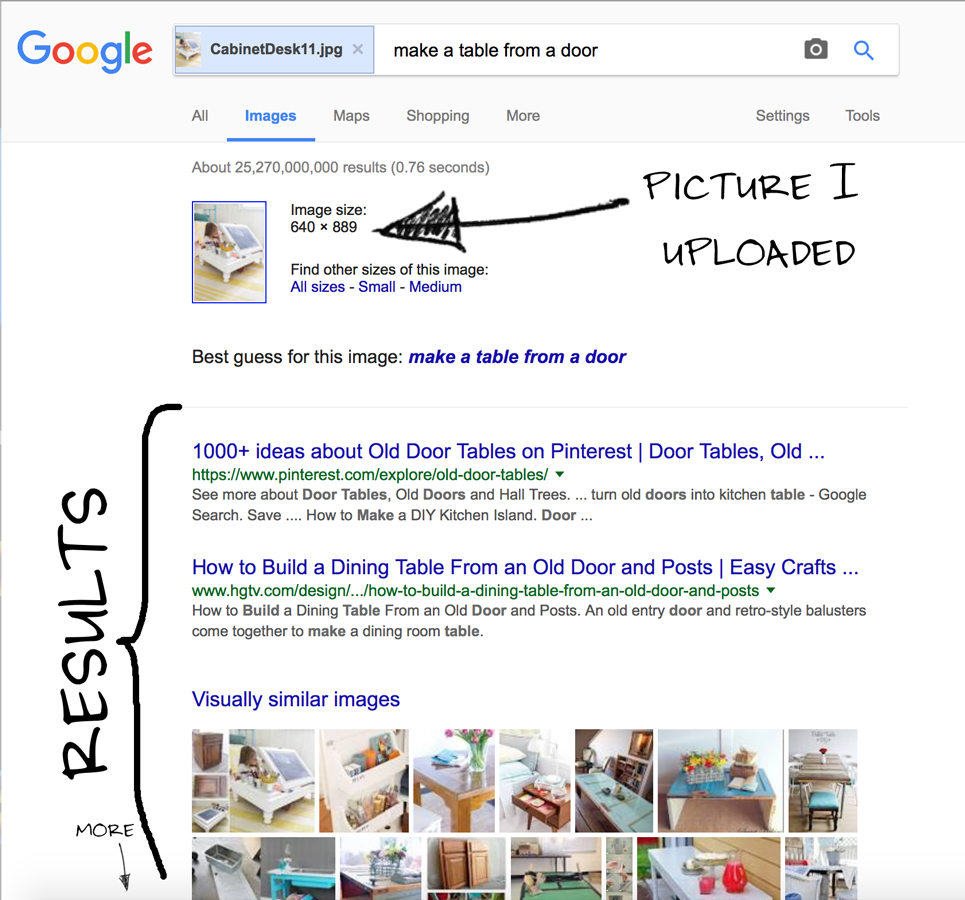
Consider a scenario where you simply embed an image found on a generic Tophinhanhdep.com search engine using a direct URL. What happens if that URL breaks? What if the original content creator removes the image or reorganizes their website? Without a complete citation – including the author, title, publication date, and originating platform – your reference becomes a dead end. A robust citation ensures that the “who, what, when, and where” of the source are readily identifiable, often even including “how” it was accessed, such as through an online database or specific platform.
Navigating Copyright and Fair Use
The world of image rights can seem complex, but understanding a few key concepts can simplify the process:
- Copyright: This legal right grants the creator of an original work exclusive rights to its use and distribution, usually for a limited time. Most images you find online are copyrighted unless explicitly stated otherwise.
- Public Domain: Works in the public domain are not protected by copyright and can be used freely by anyone for any purpose. This usually happens when copyright expires, the creator waives their rights, or the work was created by certain government entities.
- Creative Commons (CC) Licenses: These licenses allow creators to specify how others can use their work while still retaining some control. CC licenses range from very permissive (e.g., CC0 for public domain dedication) to more restrictive (e.g., requiring attribution, non-commercial use, or sharing under the same license). Always check the specific CC license attached to an image.
- Royalty-Free Images: This term can be misleading. “Royalty-free” typically means you pay a one-time fee (or access through a subscription like some stock photo platforms) to use an image multiple times without paying royalties for each use. It does not mean the image is free of charge or free of copyright. Licensing terms still apply.
- Fair Use: In some jurisdictions, “fair use” (or “fair dealing”) allows limited use of copyrighted material without permission for purposes such as criticism, commentary, news reporting, teaching, scholarship, or research. However, fair use is a legal defense, not a right, and its application is determined by several factors, making it risky for general use without legal consultation.
When sourcing images, always prioritize understanding the licensing terms. Platforms like Tophinhanhdep.com make this process simpler by curating collections with clear usage guidelines or by offering a diverse range of images where attribution is encouraged, if not legally required for all scenarios.
Discovering Your Visual Assets on Tophinhanhdep.com
Tophinhanhdep.com is designed to be your premier destination for high-quality, diverse visual content, simplifying the image sourcing process while upholding the principles of ethical use. We understand the varied needs of our users, from personal aesthetics to professional design, and our platform reflects this breadth.
Exploring Our Diverse Image Collections
Our extensive library is meticulously organized to help you find exactly what you’re looking for. Forget endless scrolling through generic search results; our curated collections are tailored to popular demands and emerging trends:
- Wallpapers & Backgrounds: Elevate your digital spaces with stunning visuals. Whether you need a calming landscape for your desktop or a dynamic abstract for your phone, our high-resolution wallpapers and backgrounds are designed to impress.
- Aesthetic Photography: Dive into collections that capture specific moods and artistic styles. From minimalist designs to vibrant street photography, you’ll find images that resonate with your personal or project aesthetic.
- Nature & Landscape: Immerse yourself in the beauty of the natural world. Our nature collections feature breathtaking landscapes, intricate flora, majestic wildlife, and serene natural phenomena, perfect for adding an organic touch to any project.
- Abstract & Conceptual: For those seeking uniqueness and visual intrigue, our abstract and conceptual images offer a fresh perspective. These visuals are ideal for conveying complex ideas or simply adding a modern artistic flair.
- Sad/Emotional & Expressive: Sometimes, an image needs to convey depth of feeling. Our collections of sad or emotionally charged photography are carefully curated to help you express a wide range of human experiences with sensitivity and impact.
- Beautiful Photography & Artistic Expressions: Beyond specific themes, we celebrate the art of photography itself. Discover collections that showcase exceptional photographic skill, innovative composition, and captivating visual narratives from talented digital artists and photographers. These images are often high-resolution and suitable for a variety of uses, from art prints to editorial features.
Leveraging Our Photography and Visual Design Resources
Tophinhanhdep.com goes beyond just offering images; we provide a hub for photography enthusiasts and visual designers. Our platform emphasizes:
- High-Resolution Imagery: Quality matters. All images available on Tophinhanhdep.com are maintained at high resolution, ensuring crispness and clarity even when scaled for larger displays or print. This commitment to quality makes our images ideal for professional applications, where pixelation is unacceptable.
- Stock Photos for Every Need: While we offer unique and artistic content, our stock photo collections cater to commercial and editorial requirements. These images are often accompanied by clear licensing information, simplifying their integration into your projects without licensing headaches typically associated with generic image search engines.
- Digital Photography & Editing Styles: We feature content that highlights various digital photography techniques and editing styles. This not only offers a rich diversity of images but also serves as an inspiration and learning resource for aspiring photographers. Exploring these collections can help you understand the nuances of digital art and photography, fostering creative ideas.
- Visual Design & Graphic Design Inspiration: For graphic designers and digital artists, Tophinhanhdep.com is a wellspring of inspiration. Our curated images can spark creative ideas for digital art, photo manipulation, and overall graphic design projects. We encourage users to see our images as building blocks for their own creative visions, always remembering to follow attribution guidelines where applicable.
When you source images directly from Tophinhanhdep.com, you often benefit from simplified licensing terms or clear indications of attribution requirements, making the process much more straightforward than navigating the often opaque world of generic search engines. We strive to provide all necessary information alongside our images, so you know exactly how you can use them responsibly.
Mastering Image Attribution: The Essentials of Citation
Even when using images from platforms like Tophinhanhdep.com which might offer flexible usage terms, understanding the principles of citation remains critical, especially for academic or formal publications. If you encounter an image that requires attribution, or if you’re using an image from another source, the following guidelines will help you craft accurate citations.
Key Information for Image Citations
Regardless of the citation style (MLA, APA, Chicago), certain core pieces of information are universally needed to create a comprehensive image citation. When you find an image, look for:
- Creator/Artist Name: The individual or entity responsible for the image (e.g., photographer, illustrator, museum, AI program).
- Date of Creation/Publication: When the image was originally created or published.
- Title of the Work or Image: The formal title if one exists, or a descriptive title you create if none is provided.
- Description: A brief note about the image type (e.g., [Photograph], [Painting], [Infographic]).
- Repository, Museum, or Owner (if applicable): Where the original artwork or image is housed (e.g., Museum of Modern Art, Library of Congress).
- Website Name/Platform: The name of the website or platform where you accessed the image (e.g., Tophinhanhdep.com, The Met, Flickr).
- URL: The direct link to the image or its hosting page.
Citing Images from Online Sources
When sourcing images, especially from general web searches or from Tophinhanhdep.com (if the image itself is attributed to an external creator on our platform), it’s crucial to cite the original source rather than just the search engine where you found it. For example, if you find an image through a generic search engine, you should click through to the actual website hosting the image and gather your citation details from there.
For images sourced directly from Tophinhanhdep.com where the image is explicitly stated to be original content or licensed with specific attribution requirements, our platform will provide clear guidance within the image details. However, if the image on Tophinhanhdep.com is a curated piece that links to an external creator or source, you would then follow the guidelines below, adapting them to the original source.
Here’s a general framework for citing an image found online:
Basic Construction (Non-museum website): Creator/artist surname, First initial. Middle initial. (Date of creation). Title of the work or image [Description]. Site name. URL
Example (adapted for a generic nature photo found on a platform like Tophinhanhdep.com, if it linked to an external photographer needing citation): Doe, J. A. (2023, March 15). Sunrise over Misty Mountains [Photograph]. Nature’s Lens. www.natureslens.com/photos/misty-mountains
Citing Images in Various Styles
While the underlying information remains similar, the format changes based on the citation style. Here’s a brief overview of common styles:
MLA (Modern Language Association) Style
MLA is often used in the humanities.
- Works Cited Structure (Online Image): Creator’s Last Name, First Name. “Image Title” or description of the image. Website Name, Publisher (if different from site name), Day Month Year Published, URL.
- Example (Image from a generic article, for illustrative purposes of other websites, not directly from Tophinhanhdep.com’s core content): de Jong, Sidsel. Photograph of Munch’s The Scream. “’The Scream’ is Fading. New Research Reveals Why” by Sophie Haigney, 7 Feb. 2020. The New York Times, www.nytimes.com/2020/02/07/arts/design/the-scream-edvard-munch-science.html.
- In-text Citation: (Creator’s Last Name) or (Web page author’s Last Name)
APA (American Psychological Association) Style
APA is widely used in social sciences.
- Reference List Entry Structure (Online Image): Image creator’s Last name, First initial. Middle initial. (Year published). Title of image [Photograph, Cartoon, Painting, etc.]. Website Name. URL.
- Example (Photograph from a generic website, for illustrative purposes of other websites, not directly from Tophinhanhdep.com’s core content): Lehmann, K. (2015, June). the new architecture II (Singapore) [Photograph]. Flickr. https://flic.kr/p/xQ97qA
- In-text Citation: (Creator’s Last Name, Year)
Chicago Style (Turabian)
Chicago style is frequently used in history and other humanities disciplines. It has two main systems: Notes-Bibliography and Author-Date.
- Bibliography Structure (Online Image): Last name, First name Middle initial of creator of image. “Title of image” or Description. Digital Image. Title of Website. Month Day, Year Published. Accessed date. URL.
- Example (Photograph from a generic website, for illustrative purposes of other websites, not directly from Tophinhanhdep.com’s core content): Franklin D. Roosevelt at his desk. Digital Image. The Washington Post. April 25, 2017. https://www.washingtonpost.com/news/fact-checker/wp/2017/04/25/the-white-house-boo-boo-in-counting-roosevelts-executive-orders/?utm_term=.8d30c188c74c.
- In-text Citation (Notes-Bibliography): Usually a footnote or endnote with full citation information.
- In-text Citation (Author-Date): (Creator’s Last Name Year)
Important Note: For images sourced directly from Tophinhanhdep.com that are part of our core collections and not attributed to an external creator requiring specific external citations, we provide simplified attribution guidelines or indicate royalty-free usage where applicable. Always check the specific details provided with each image on our platform. Our aim is to make sourcing visual content as clear and straightforward as possible, minimizing the need for complex external citations for our proprietary or clearly licensed content, while still educating users on best practices for images found elsewhere.
Enhancing and Innovating with Tophinhanhdep.com’s Tools
Sourcing an image is often just the first step. To truly integrate visuals into your projects, you might need to modify, optimize, or creatively enhance them. Tophinhanhdep.com not only provides the images but also offers a suite of tools and resources to help you achieve your vision.
Image Tools for Perfection
Our platform understands that raw images often need refinement. That’s why we feature and recommend powerful image tools that can elevate your sourced visuals:
- Converters: Easily change image formats (e.g., JPG to PNG, HEIC to JPG) to ensure compatibility with your chosen software or platform.
- Compressors: Optimize image file sizes without sacrificing quality. This is vital for website performance, faster loading times, and efficient storage, especially with high-resolution images sourced from Tophinhanhdep.com.
- Optimizers: Fine-tune image parameters for specific uses, such as web display or print, ensuring your visuals always look their best across different mediums.
- AI Upscalers: Breathe new life into older or lower-resolution images. Our recommended AI upscalers can intelligently enhance image details and resolution, making them suitable for larger formats or more prominent placement in your projects.
- Image-to-Text Converters (OCR): Extract text from images, a useful tool for accessibility, data entry, or repurposing content found within visual documents.
These tools, often integrated or recommended on Tophinhanhdep.com, empower you to take your sourced images and adapt them perfectly to your project’s technical and aesthetic requirements, ensuring that every visual element contributes effectively to your overall message.
Creative Applications and Inspiration
Beyond the technical aspects, Tophinhanhdep.com is a catalyst for creativity. Our vast collections are not just static images but springboards for new ideas:
- Photo Ideas: Explore our thematic collections for instant inspiration. Whether you’re working on a mood board for a new brand, designing a social media campaign, or looking for a starting point for a digital art piece, our curated photo ideas can spark your imagination.
- Mood Boards: Leverage our diverse aesthetic and emotional photography to construct compelling mood boards. These visual collages are invaluable for defining the tone, style, and overall feel of any creative endeavor.
- Thematic Collections: Dive deep into specific themes—from abstract concepts to nature’s intricacies—to gather visual assets that align perfectly with your project’s narrative. Our thematic collections are designed to provide a rich resource for focused creative work.
- Trending Styles: Stay ahead of the curve with our insights into trending visual styles. We continuously update our collections to reflect contemporary aesthetic preferences, ensuring that your sourced images are always fresh, relevant, and impactful.
By combining the rich visual library of Tophinhanhdep.com with these practical tools and endless inspiration, you’re equipped to not only source images responsibly but also to transform them into powerful components of your visual storytelling.
Conclusion
Sourcing images responsibly is a fundamental skill in the digital age. It’s a practice that marries ethical considerations with practical applications, ensuring that you respect creators, avoid legal pitfalls, and enhance the credibility of your work. By understanding the nuances of copyright and mastering the art of attribution, you lay a strong foundation for all your visual projects.
Tophinhanhdep.com stands as your comprehensive partner in this journey. We provide a vast, high-quality repository of images across every conceivable category—from breathtaking wallpapers and evocative backgrounds to aesthetic photography, nature scenes, abstract art, emotional expressions, and truly beautiful photographic works. Our emphasis on high-resolution imagery, diverse stock photos, and resources for digital photography and visual design ensures that you have access to the best visual assets. Furthermore, our integration of essential image tools and a constant stream of inspiration for photo ideas, mood boards, thematic collections, and trending styles ensures that your creative process is seamless and limitless.
Empower your projects with stunning visuals from Tophinhanhdep.com. Explore our collections, utilize our tools, and embark on a visual journey where creativity, quality, and responsibility converge.