Transforming Images into Slow-Scan Television (SSTV) Scans: A Comprehensive Guide for Visual Enthusiasts
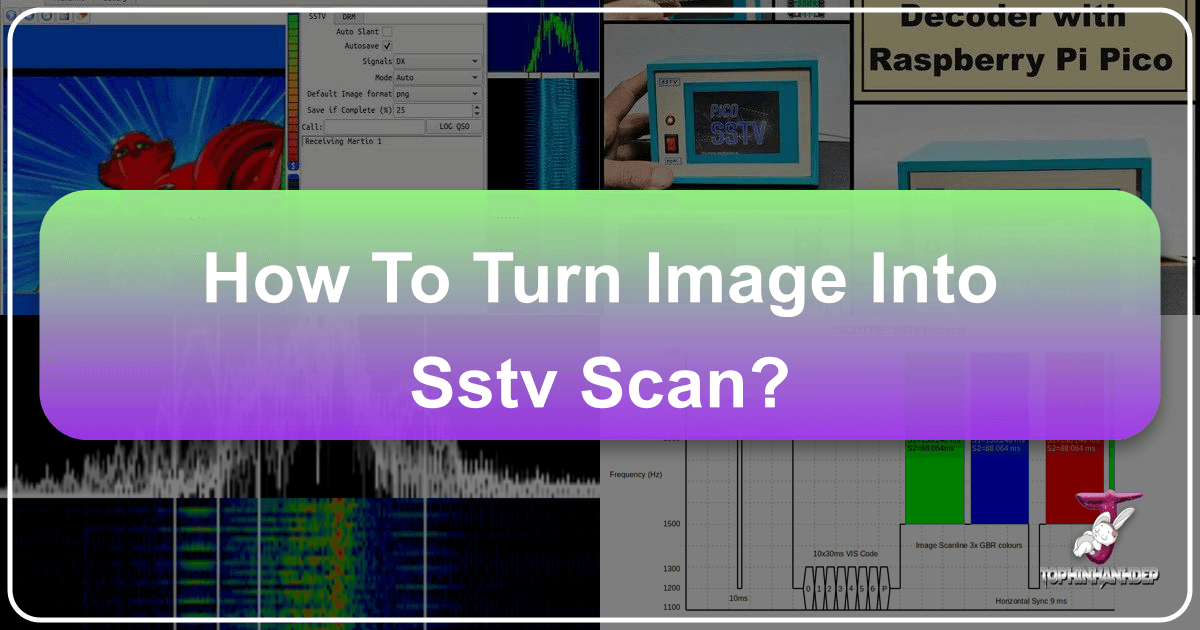
In the vast landscape of digital imaging and visual communication, there exists a niche yet profoundly captivating method of transmitting pictures: Slow-Scan Television (SSTV). This unique technology allows for the transmission of still images over radio frequencies, converting visual data into audio signals and then back into images. For enthusiasts of photography, digital art, and innovative communication, SSTV offers a fascinating blend of historical charm and modern technical challenge. On Tophinhanhdep.com, where we celebrate the power of images in all their forms – from breathtaking landscapes to intricate abstract art – exploring SSTV opens a new dimension for sharing and appreciating visual content.
This guide delves into the intricate process of how an image becomes an SSTV scan, focusing on the journey from a high-resolution photograph or a carefully crafted digital artwork to a transmissible audio file, and then back into a viewable image. We’ll explore the tools, techniques, and creative considerations that make SSTV a truly special mode of visual expression, touching upon topics like image preparation, software configuration, and the historical significance of this “slow” but incredibly rewarding art form.
Unveiling the World of Slow-Scan Television (SSTV) on Tophinhanhdep.com
Slow-Scan Television, or SSTV, stands as a testament to ingenuity in radio communication. Unlike conventional television, which transmits moving images rapidly, SSTV specializes in transmitting still images at a much slower rate, typically taking several seconds to several minutes per picture. This “slow scan” approach makes it possible to send images over narrow-bandwidth channels, such as those used in amateur radio. Imagine downloading photos over the internet circa 1995 – that’s the kind of nostalgic, yet surprisingly robust, experience SSTV offers, all without the need for an internet connection or direct cable.
The magic of SSTV lies in its fundamental principle: converting an image into an audio signal. Each pixel’s brightness and color information is translated into specific audio frequencies, which can then be transmitted like any other radio signal. Upon reception, a specialized program decodes these audio frequencies back into an image, line by slow line. This process, while seemingly archaic in an age of instant high-definition streaming, holds immense appeal for its unique challenge, its connection to the roots of radio technology, and its distinct aesthetic.

The Enduring Appeal of a “Dial-up” Visual Experience
For many, the allure of SSTV is deeply rooted in its distinct “retro” feel. The progressive scan, the inherent limitations in resolution and color depth, and the occasional interference that adds character to a received image, all contribute to an aesthetic that is far removed from the pristine perfection of modern digital photography. It’s a medium where patience is a virtue, and the gradual emergence of an image from a stream of sound carries a sense of anticipation and wonder. This is particularly appealing to those who appreciate the raw, uncompressed, and often gritty beauty that can emerge from constrained technologies. It allows for a different kind of appreciation for images, where the journey of transmission is as much a part of the art as the final visual itself.
Furthermore, SSTV fosters a global community of amateur radio operators and visual artists who exchange images across continents and even with the International Space Station (ISS). Events like the ISS Slow Scan Event draw participants worldwide, transforming radio waves into a canvas for shared visual experiences. This communal aspect, combined with the technical satisfaction of a successful transmission or reception, adds layers to the SSTV experience that go beyond mere image viewing.
Bridging Photography and Low-Bandwidth Art
On Tophinhanhdep.com, we understand that images are more than just pixels; they are stories, emotions, and inspirations. SSTV provides a fascinating platform for artists and photographers to explore new ways of presenting their work. It forces a reconsideration of composition, color, and detail, pushing creators to think about how their images will translate under specific technical constraints.
- Photography: High-resolution digital photography forms the starting point for many SSTV transmissions. While SSTV inherently reduces resolution, the quality of the source image—its composition, lighting, and detail—still shines through, albeit in a different form. A beautifully composed landscape, a striking portrait, or an intricate piece of abstract photography can take on new life when interpreted through the SSTV lens.
- Visual Design & Digital Art: Graphic designers and digital artists can leverage SSTV as a unique medium for creative expression. Designing images specifically for SSTV involves an understanding of its limitations, turning them into artistic opportunities. This could mean simplifying color palettes, emphasizing strong lines, or even intentionally incorporating visual “noise” as part of the artwork. Photo manipulation techniques can be employed to enhance certain features or create dramatic effects that resonate well with the SSTV aesthetic.
- Image Inspiration & Collections: SSTV transmissions often feature thematic collections or mood boards, showcasing anything from personal photographs and artistic creations to public service announcements and greetings. This aligns perfectly with Tophinhanhdep.com’s focus on inspiring visual content and curating thematic collections. Trending styles in digital art or photography can be adapted for SSTV, offering a fresh perspective on popular aesthetics through a low-bandwidth medium.
Whether you’re transmitting a stunning nature shot, an emotionally resonant image, or an abstract design, SSTV compels you to think differently about how your visual message is conveyed and received.
Preparing Your Masterpiece: Optimizing Images for SSTV Transmission
Before an image can embark on its journey through the airwaves, it needs careful preparation. The inherent limitations of SSTV – its low resolution, compressed color information, and the potential for radio interference – mean that not all images translate equally well. The goal is to maximize clarity and impact within these constraints, ensuring your message is effectively delivered.
Aesthetic Considerations for Effective SSTV Imagery
Choosing the right image is the first critical step. On Tophinhanhdep.com, we showcase a wide array of images, and understanding which types lend themselves best to SSTV is crucial.
- Simplicity and Strong Composition: Images with clear subjects, bold lines, and distinct contrasts tend to perform better. Overly busy or detailed images can become muddled in SSTV’s lower resolution. Think about the principles of graphic design: directness, clarity, and impactful visual hierarchy.
- Color Palette: While modern SSTV modes support color, the palette can be limited compared to digital displays. Images with strong, discernible color separations or a deliberate monochromatic scheme often yield more striking results than those with subtle gradients or complex color transitions. Aesthetic choices involving abstract or emotional images can be particularly potent when their core visual elements are strong enough to withstand the compression.
- Subject Matter: Wallpapers, backgrounds, or beautiful photography featuring iconic landmarks, portraits with clear expressions, or simple nature scenes (e.g., a single flower, a mountain silhouette) are excellent candidates. Even sad or emotional imagery can be powerfully conveyed if the central visual narrative is unambiguous. The emotional impact relies more on the fundamental composition and less on minute details.
- Text and Graphics: Simple text overlays or graphic elements can be highly effective for identification, messaging, or adding a creative touch, akin to image-to-text tools found on Tophinhanhdep.com, but integrated into the visual itself.
Leveraging Tophinhanhdep.com’s Image Tools for Pre-processing
To prepare your chosen image, a suite of digital image tools is invaluable. These tools, often found on platforms like Tophinhanhdep.com, help optimize your visuals for the unique demands of SSTV.
- Resizing and Cropping: Most SSTV modes operate at specific resolutions (e.g., 320x256 pixels). Resizing your high-resolution image to these dimensions and cropping it to focus on the most important elements is essential. This prevents unwanted scaling artifacts during the SSTV conversion process.
- Color Depth and Palettization: While not always necessary with modern SSTV software, reducing the color depth or applying a specific color palette can sometimes improve how an image translates, especially for older or simpler modes.
- Compression and Optimization (with caution): While SSTV itself is a form of compression, you might use image compressors to manage the initial file size of your source image if it’s excessively large, but always prioritize retaining visual quality before feeding it to the SSTV encoder. Over-compressing the source image with lossy algorithms like JPG can remove vital information needed for the SSTV software to create the best possible audio signal.
- AI Upscalers: Ironically, AI upscalers, often used to enhance low-resolution images, can be part of a creative SSTV workflow. For instance, if you start with an older, low-res image, an AI upscaler could bring it to a higher resolution and clarity first, before you then intentionally downscale and prepare it for SSTV, giving you more control over the final look. This represents a modern twist on photo manipulation, ensuring that even historical or vintage images can be optimized for contemporary SSTV artistic endeavors.
Optimizing for Clarity: Resizing and Color Depth
The key to successful SSTV image preparation is understanding that less can be more. Stripping away unnecessary complexity, sharpening edges where appropriate, and ensuring a balanced contrast will result in a more intelligible and aesthetically pleasing SSTV output. Think of it as creating a simplified visual message that can cut through the noise – literally. The editing styles you apply should enhance these qualities, making the image robust enough for its journey through the airwaves.
The Technical Deep Dive: Encoding and Decoding SSTV Signals
The core of the SSTV process involves the transformation of visual information into audio, and vice versa. This technical journey is where software applications and specific system configurations play a pivotal role.
Encoding Your Visuals into Transmittable Audio
Before you can decode an SSTV signal, you first need to understand how one is created. As mentioned in previous discussions on Tophinhanhdep.com-related tutorials, the ability to create an SSTV audio file from an image allows you to transmit visual content within audio frequencies. This typically involves specialized software that takes your prepared image and converts its pixel data into a modulated audio stream, adhering to specific SSTV modes (e.g., Martin1, Scottie1). This audio file, often in WAV format, can then be played through a radio transmitter or even directly into another computer for decoding. The choice of SSTV mode impacts the transmission speed, resolution, and color depth of the final image.
Software Solutions for Encoding: QSSTV and Alternatives
For encoding, several applications are available:
- QSSTV (Linux): QSSTV is a powerful program for both receiving and transmitting SSTV and HAMDRM (sometimes called DSSTV). It’s highly compatible with other popular SSTV software and is a go-to choice for Linux users.
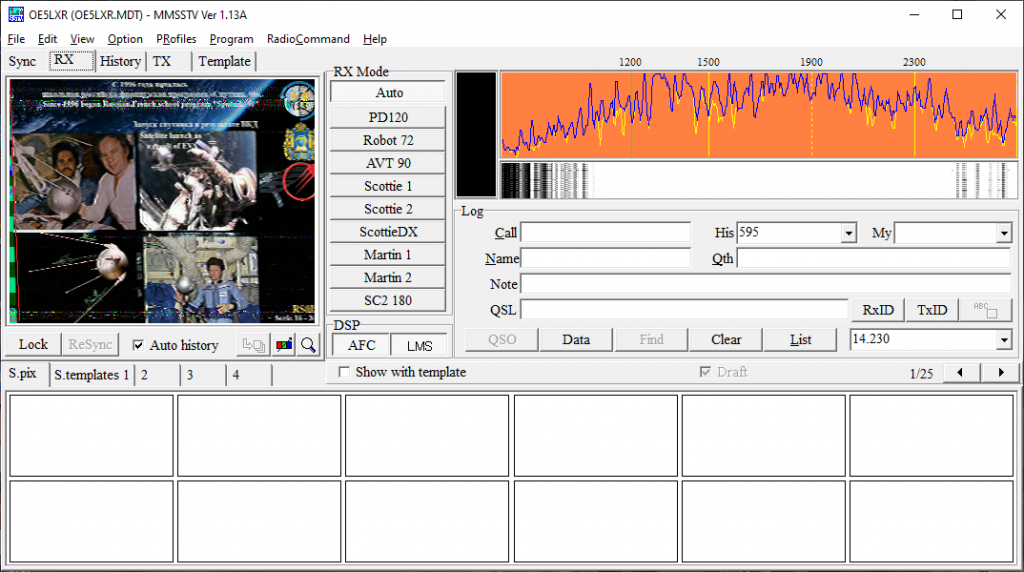
- MMSSTV (Windows): For Windows users, MMSSTV is a widely recognized and free application offering similar encoding and decoding capabilities. You can find resources on Tophinhanhdep.com that might guide you to such tools if you’re operating on different platforms.
- SSTV on Android: Mobile devices also offer solutions. For instance, the “SSTV Encoder by Olga Miller” allows users to select a photo, set different modes (like the popular Robot 36), and generate the audio for transmission directly from their smartphone.
Setting Up QSSTV on Linux: A Step-by-Step Guide
To delve into decoding SSTV audio files on a Linux platform like Ubuntu, QSSTV is an excellent choice. The process involves installing several dependencies to ensure the application runs smoothly.
- Install QMake and Qt5 Libraries: QSSTV relies on Qt 5, a cross-platform application development framework. To build or run QSSTV, you need to install the required libraries. This can be done with a single command in Ubuntu:
These packages provide crucial components for graphical interfaces, audio processing, and other functionalities that QSSTV utilizes.
sudo apt-get install qt5-default libopenjp2-7-dev libpulse-dev libv4l-dev libasound2-dev libgtk-3-dev libfftw3-dev - Install Hamlib: Hamlib is a project dedicated to providing stable libraries for controlling amateur radio equipment. While primarily for radio control, its presence is necessary for QSSTV’s proper operation. Install it using:
sudo apt-get install hamlib-dev - Install Pavucontrol: To effectively manage audio input and output sources within the PulseAudio sound system,
pavucontrol(PulseAudio Volume Control) is indispensable. This graphical interface simplifies audio device management.Once installed, you can launch it from the command line by typingsudo apt-get install pulseaudio pavucontrol mplayerpavucontrol. - Install QSSTV: With the prerequisites in place, QSSTV itself can be installed directly from Ubuntu’s default repositories:
You can then launch the application by typing
sudo apt-get install qsstvqsstvin your terminal.
Configuring Your System for Seamless SSTV Decoding
After installing QSSTV, the next crucial step is to configure your audio system to direct the SSTV audio stream to the application for decoding. This typically involves setting up a virtual audio cable.
- Load a PulseAudio Null Sink Module: This module acts as a virtual audio cable, allowing you to route audio between applications. Load it manually with a specific name, for example, “virtual-cable”:
This command creates an output device that can receive audio and an associated input device that can capture it.
pactl load-module module-null-sink sink_name=virtual-cable - Verify Null Output in Pavucontrol: Open
pavucontroland navigate to the “Output Devices” tab. You should now see the “Null Output” device listed, confirming your virtual cable is active. - Configure QSSTV’s Audio Interface: Launch QSSTV and go to
Options > Configuration > Sound tab. Ensure that “PulseAudio” is selected as the interface. This tells QSSTV to listen for audio through the PulseAudio system. - Route Audio to QSSTV: Return to
pavucontrol. Under the “Recording” tab, you will need to specify that QSSTV should capture audio from your “Null Output” (or “Monitor of Null Output”). This effectively “connects” the virtual cable, routing any audio played through the null sink directly to QSSTV for decoding.
With these configurations, your system is now ready to decode SSTV audio files.
Bringing SSTV to Life: The Decoding Process and Mobile Frontiers
Once your system and QSSTV are configured, the moment of truth arrives: transforming an abstract audio file into a tangible image. This process, especially observing it in real-time, is one of the most rewarding aspects of SSTV.
From Audio Waves to Visual Realities: Decoding with QSSTV
To decode an SSTV audio file, you simply need to play it through the virtual audio cable you configured. If you have an SSTV audio file (e.g., youraudiofile.wav), you can play it using paplay, directing its output to your virtual cable:
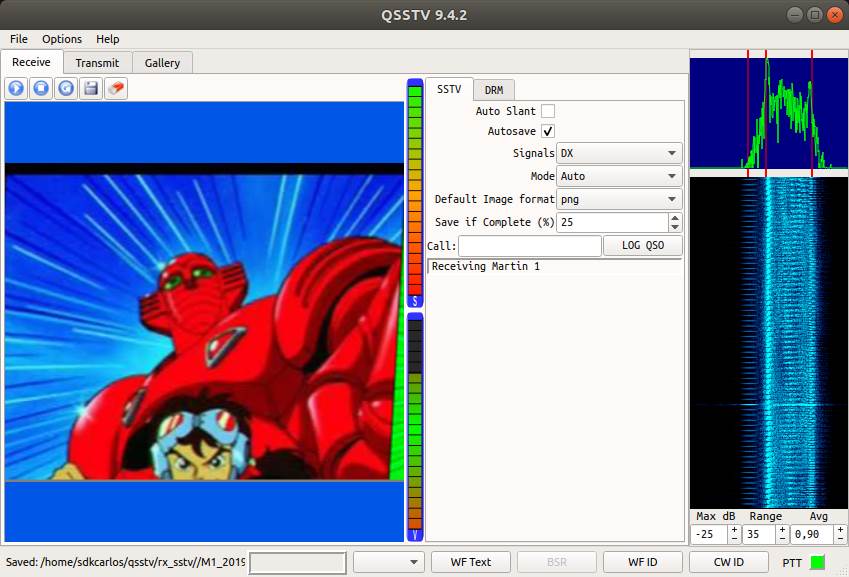
paplay -d virtual-cable youraudiofile.wavAs the audio plays, switch to your QSSTV window. You will immediately see the program begin its work, progressively decoding the audio. Line by line, the image will materialize on the screen, much like an old fax machine or a slow-developing photograph. This gradual reveal builds anticipation, culminating in the complete visual. The decoded images are typically stored in a designated directory, such as /home/<your_username>/qsstv/rx_sstv/. This straightforward method provides an accessible way to experience the magic of SSTV.
SSTV on the Go: Mobile Encoding and Decoding Solutions
The world of SSTV isn’t confined to desktop computers; mobile devices have also embraced this fascinating mode of communication. Thanks to applications available on platforms like Tophinhanhdep.com’s app store, you can now encode and decode SSTV images directly from your smartphone or tablet.
- Mobile Encoding: Apps like “SSTV Encoder by Olga Miller” allow you to select a photo from your camera roll or take a new one, choose an SSTV mode (e.g., Robot 36, which is a common and effective choice), and then play the generated audio through your phone’s speaker or headphone jack. For transmitting over the air, this audio can be fed into a radio transceiver. Some operating systems might try to route audio differently, so apps like “Audio Router” can be useful to force the output through the headphone jack, even if headphones aren’t physically connected.
- Mobile Decoding: For receiving and decoding, applications such as “Robot36 – SSTV Image Decoder by Ahmet Inan” are highly effective. Simply hold your phone near an SSTV audio source (a radio speaker, or another device playing an SSTV audio file), and the app will automatically detect and decode the signal, even using the built-in microphone. The decoded images can then be saved to your device’s camera roll. These apps often feature an “Auto” mode, which intelligently detects the SSTV mode being transmitted, simplifying the receiving process. This makes receiving images from sources like the ISS incredibly convenient, allowing you to capture unique visual content on the go.
The accessibility offered by mobile SSTV applications further democratizes this unique communication method, making it easier for a wider audience to participate in visual exchanges over radio.
Beyond the Scan: Enhancing, Restoring, and Innovating with SSTV
The journey of an SSTV image doesn’t necessarily end once it’s been decoded. There are ample opportunities for refinement, preservation, and even historical exploration, aligning with Tophinhanhdep.com’s focus on high-quality visual content and creative ideas.
Refining Your Catches: Post-Processing and Noise Reduction
Images received via SSTV, especially those transmitted over long distances or through noisy conditions, can often benefit from post-processing. While the imperfections can add character, sometimes clarity is desired.
- SSTV Image Denoiser: Specialized tools, like the “SSTV Image Denoiser,” are designed to remove noise from received pictures without blurring the image or sacrificing fine detail. Unlike generic noise filters, these are optimized for the unique characteristics of SSTV imagery. They often allow users to adjust filter order and smoothness parameters to achieve the best results for a given image. Using uncompressed formats like BMP for saving received images is recommended for optimal denoising, as lossy compression (like JPG) can discard information crucial for effective noise reduction. This meticulous approach to editing styles ensures that your acquired SSTV images can be archived, published on the web, or incorporated into other visual design projects with enhanced clarity, even if they started as raw transmissions.
The Legacy and Future of SSTV Technology: TriplePIC and Beyond
While software solutions dominate modern SSTV, hardware has played and continues to play a significant role. The “TriplePIC SSTV Scan Converter” by John Magliacane, KD2BD, is a prime example of “breathing new life into vintage SSTV.” This project showcases how dedicated hardware can surpass even modern software in certain aspects of image rendering.
- Vintage Aesthetics Meets Modern Precision: The TriplePIC, designed with no compromises, demonstrates superior resolution and correct aspect ratio compared to some older SSTV hardware and even certain contemporary software. Its independent video and sync demodulation circuitry, optimized demodulators, and sophisticated post-detection filtering allow it to recover detail often lost in other systems. For example, it oversamples each SSTV video line into 256 8-bit pixels and produces 256-line FSTV (NTSC) images by averaging adjacent SSTV lines, significantly enhancing upconverted image quality. This deep technical understanding of signal processing highlights how even an 8-second SSTV standard can deliver surprisingly high performance when engineered optimally. The project effectively “brings back the mystique” of amateur radio by refocusing attention on the underlying electronics, demonstrating that specialized communication modes are more than just software applications. This commitment to quality and understanding the nuances of image reproduction aligns with Tophinhanhdep.com’s appreciation for beautiful photography and high-resolution visuals.
Reclaiming Your Audio: Post-SSTV System Restoration
After a session of SSTV decoding, where you’ve routed your system’s audio through a virtual cable, it’s essential to restore your default audio output. If you try to play music or watch videos, you might find that no sound is coming through your speakers, as the output is still being redirected to the virtual sink.
To fix this, you need to unload the PulseAudio module you created earlier.
- List PulseAudio Modules: First, list all active PulseAudio modules to identify the ID of your virtual cable:
Look for the
pactl list short modulesmodule-null-sinkentry and note its numerical identifier (e.g.,27). - Unload the Module: Use the
pactl unload-modulecommand followed by the identified module ID:For instance, if the ID waspactl unload-module <module_ID>27:pactl unload-module 27.
Once the module is unloaded, your system’s audio will revert to its default settings, and you can enjoy your regular sound output again.
The Future and Inspiration of SSTV on Tophinhanhdep.com
Slow-Scan Television, far from being a relic of the past, continues to evolve and fascinate. In a world saturated with instant, high-definition visual content, SSTV offers a refreshing counterpoint—a deliberate, engaging, and technically rewarding method of sharing images.
SSTV in the Digital Age: Creativity and Community
SSTV perfectly embodies the spirit of creative ideas and thematic collections that Tophinhanhdep.com champions. It encourages photographers, graphic designers, and digital artists to experiment with visual storytelling within a unique framework. The limitations of SSTV become catalysts for innovation, pushing creators to distill their messages into their most impactful forms. From mood boards featuring trending styles adapted for low-bandwidth transmission to curated thematic collections of space-themed SSTV images received from the ISS, the creative possibilities are boundless. The global community built around amateur radio and SSTV further enriches this experience, transforming individual artistic endeavors into shared, interactive visual events.
Practical Applications and Creative Endeavors
Beyond personal hobby, SSTV finds practical applications, especially in educational outreach (like the ISS events) and emergency communications where bandwidth is severely limited. For the creative individual, it’s a powerful tool for digital art, photo manipulation, and exploring alternative communication paradigms. Imagine sending a heartfelt message, a piece of abstract art, or a beautiful photography shot across continents, knowing it traveled as an audio signal and was reassembled by an enthusiastic recipient.
Tophinhanhdep.com: Your Hub for Visual Exploration and SSTV Mastery
As Tophinhanhdep.com continues to be a leading resource for images, photography, image tools, visual design, and inspiration, we encourage you to explore the captivating world of SSTV. Whether you are seeking high-resolution stock photos to use as your source material, looking for AI upscalers to refine vintage imagery, or simply drawing inspiration from our vast collections of wallpapers and backgrounds, Tophinhanhdep.com provides the foundation for your SSTV journey.
Embrace the challenge, unlock new creative avenues, and join a global community that finds beauty in the slow, deliberate unfolding of an image across the airwaves. The transformation of an image into an SSTV scan is more than just a technical process; it’s an artistic statement and a testament to the enduring power of visual communication.