Capturing the Cosmic Echo: How the Image of Cassiopeia A Was Created for Tophinhanhdep.com
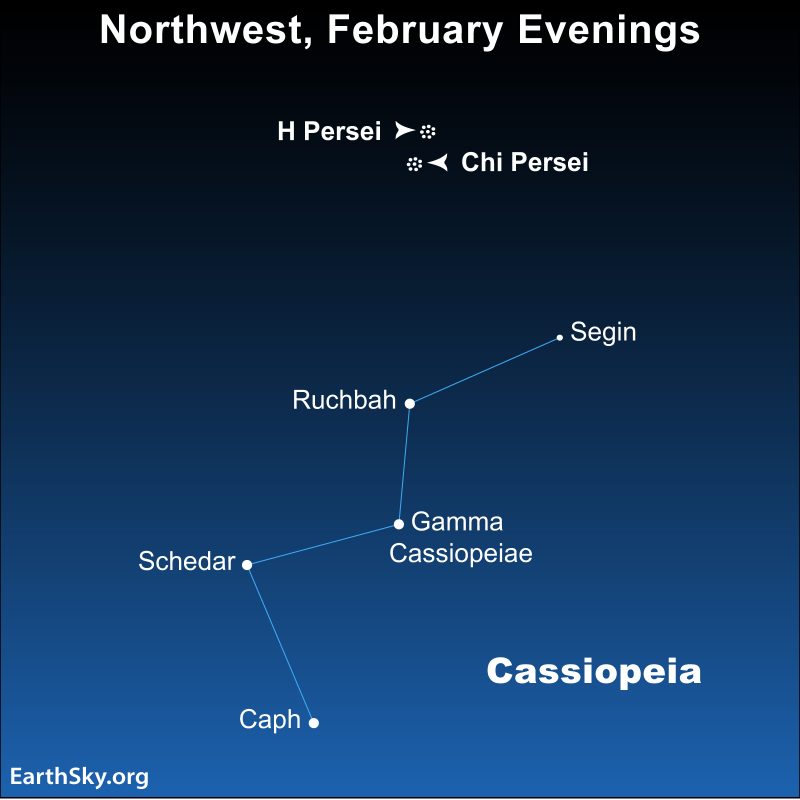
Cassiopeia A (Cas A), a magnificent supernova remnant located in the constellation Cassiopeia, stands as a testament to the dramatic and awe-inspiring processes that shape our universe. Its luminous, intricate structure, spanning approximately 10 light-years across and situated about 11,000 light-years from Earth, is not merely a scientific marvel but also a stunning visual spectacle. For a platform like Tophinhanhdep.com, dedicated to providing high-resolution images, wallpapers, and aesthetic backgrounds, understanding “how was the image of Cassiopeia A created” is paramount. It’s a story of pioneering scientific observation, cutting-edge technology, and sophisticated digital artistry that transforms raw cosmic data into the breathtaking visual assets we admire today.
The creation of the iconic images of Cassiopeia A is a complex process, involving multiple state-of-the-art telescopes observing across the electromagnetic spectrum, followed by meticulous data processing and visual design. This intricate workflow results in composite images that not only reveal profound scientific insights but also serve as incredible examples of digital photography, offering boundless inspiration for visual design and thematic collections on Tophinhanhdep.com.
The Cosmic Canvas: Understanding Cassiopeia A
Cassiopeia A is the expanding shell of material left behind after a massive star violently ended its life in a supernova explosion. This makes it a supernova remnant (SNR), and notably, it is the youngest known remnant from an exploding, massive star in our own Milky Way galaxy. Its unique status makes it an invaluable laboratory for astronomers to study the physics of supernovae, the dispersal of elements throughout the cosmos, and the formation of cosmic dust.
The supernova event itself is estimated to have occurred around the 1660s or 1680s from Earth’s perspective. Despite its brilliance, it’s believed that interstellar dust absorbed much of the optical wavelength radiation before it reached Earth, meaning there are no definitive historical records of the explosion being widely observed with the naked eye. This absence makes modern multi-wavelength observations even more critical for piecing together its history.
The scientific journey of Cas A began in 1948 when astronomers Martin Ryle and Francis Graham-Smith at Cambridge reported its discovery as an intense radio source, making it one of the first discrete astronomical radio sources ever found. Its optical component was first identified two years later in 1950. Since then, Cas A has remained the brightest extrasolar radio source in the sky at frequencies above 1 GHz, although its flux density is gradually decreasing as the remnant cools. These early observations laid the groundwork for the incredible multi-wavelength imaging campaigns that followed, each revealing a different layer of its dynamic structure.
A Symphony of Light: Multi-Wavelength Imaging Techniques
To truly comprehend Cassiopeia A, scientists and visual artists alike must look beyond what the human eye can perceive. The remnant emits radiation across the entire electromagnetic spectrum, from radio waves to X-rays, each wavelength revealing distinct physical processes and components. This necessitates the use of a diverse array of specialized telescopes, each designed to capture specific types of cosmic light. The subsequent combination of this multi-wavelength data through sophisticated processing techniques is what ultimately crafts the stunning, false-color images seen on platforms like Tophinhanhdep.com. This approach is a prime example of high-resolution digital photography and advanced image editing styles tailored for scientific visualization and aesthetic appeal.
The Visible Spectrum: Hubble’s Golden Gaze
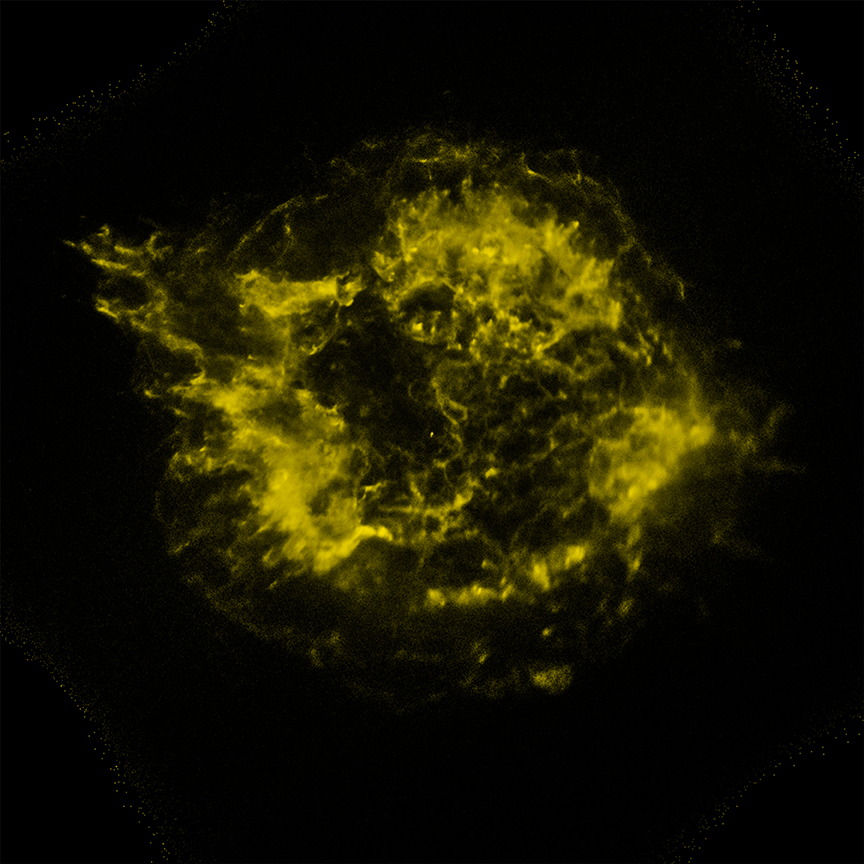
The Hubble Space Telescope, observing primarily in visible light and near-ultraviolet, has contributed significantly to our understanding and visualization of Cassiopeia A. Hubble’s images, often rendered in warm “gold” tones in composite visuals, showcase the intricate filaments and knots of glowing gas that make up parts of the remnant. These observations have been crucial for studying the expansion of the supernova shell, revealing that the remnants are not expanding uniformly. Instead, high-velocity ejecta knots move at speeds ranging from 5,500 to 14,500 km/s, with the highest speeds concentrated in two nearly opposing jets. Hubble’s data helps visualize how different chemical compositions remain grouped together, providing a roadmap to the star’s explosive demise. These detailed visible-light captures form an essential layer in the multi-instrument composite images, offering a more traditional “beautiful photography” perspective that complements the less familiar wavelengths.
X-Ray Vision: Chandra’s Elemental Insights
Perhaps the most dramatic contributions to Cas A’s imagery come from X-ray astronomy, particularly from NASA’s Chandra X-ray Observatory. Supernova remnants, being millions of degrees hot, glow intensely in X-ray light, making X-ray telescopes indispensable for their study. Chandra’s unparalleled sharp X-ray vision allows astronomers to not only detect the presence of various elements but also map their precise locations within the expanding nebula.
A new image from Chandra, for instance, shows silicon in red, sulfur in yellow, calcium in green, and iron in purple, with high-energy X-ray emission and the outer blast wave depicted in blue. This false-color assignment is a key aspect of “digital art” and “photo manipulation” in astrophotography, translating invisible energies into a visually interpretable format. Chandra data has shown that the supernova generated prodigious amounts of these elements – tens of thousands of Earth masses of sulfur and silicon, 70,000 Earth masses of iron, and a staggering one million Earth masses of oxygen. The ability to identify and locate these elements visually offers direct evidence of stellar nucleosynthesis and how these crucial building blocks of life are dispersed into interstellar space. In 1999, Chandra also pinpointed CXOU J232327.8+584842, the central compact object, which is the neutron star remnant left by the explosion, further enriching the scientific narrative and visual representation of Cas A.
Infrared Revelation: Webb and Spitzer Unveil Hidden Dust
Infrared telescopes provide yet another crucial perspective, allowing astronomers to pierce through the dust and gas that might obscure visible light, and to detect cooler, warmer components. Both the Spitzer Space Telescope and, more recently, the James Webb Space Telescope (JWST), have offered revolutionary infrared views of Cassiopeia A.
Spitzer observed an infrared echo of the explosion in 2005, showing thermal emission from dust heated by the supernova’s radiative output. This light echo, recorded in the optical spectrum, provided direct confirmation that the supernova was of Type IIb – a massive star that lost most of its hydrogen envelope before collapsing. These infrared observations are vital for understanding the initial stages of the explosion and the surrounding interstellar medium.
The James Webb Space Telescope, with its Mid-Infrared Instrument (MIRI) and Near-Infrared Camera (NIRCam), has unveiled unprecedented details. Webb’s MIRI images, translated into striking visible-light wavelengths, reveal curtains of warm dust in orange and red on the remnant’s exterior, indicating where ejected material collides with surrounding circumstellar gas. Inside, mottled filaments of bright pink denote stellar material rich in oxygen, argon, and neon, alongside dust emission. An unexpected feature, nicknamed the “Green Monster,” is a loop extending across the central cavity, pockmarked with mini-bubbles, highlighting the complex and often surprising nature of cosmic phenomena.
JWST’s NIRCam complements MIRI by observing in the near-infrared. Its high-definition images display the inner shell as clumps of bright orange and light pink gas, composed of sulfur, oxygen, argon, and neon – direct remnants of the exploded star. The outskirts appear as “smoke from a campfire,” a white glow attributed to synchrotron radiation from high-speed charged particles spiraling around magnetic fields. NIRCam images also distinctively capture “light echoes,” where the ancient light from the supernova’s explosion has traveled outwards, encountered distant dust, and caused it to glow as it slowly cools. The creation of these NIRCam images involves combining separate exposures taken through different filters (e.g., F162M assigned blue, F356W green, F444W red), showcasing sophisticated digital photography and advanced editing styles used to produce rich, multi-layered visual designs.
Radio Astronomy: Probing the Invisible Spectrum
Returning to its initial discovery, Cassiopeia A remains a prime target for radio astronomy. Telescopes like the National Science Foundation’s Very Large Array (VLA) in New Mexico capture the radio emissions, revealing a different facet of the remnant. Radio images show bright filaments representing the ejected material, highlighting the non-thermal emission from highly energetic electrons spiraling in magnetic fields. While these images might not be as vibrant in color as optical or infrared composites, they are critical for understanding the magnetic fields and particle acceleration processes within the supernova remnant. These raw radio data, though invisible to the eye, are transformed into visual representations through specific processing techniques, adding another dimension to the comprehensive digital art of Cas A.
From Raw Data to Breathtaking Imagery: The Art of Astronomical Image Processing
The journey from astronomical observation to the stunning images featured on Tophinhanhdep.com is as much an art as it is a science. It involves a sophisticated interplay of image tools, visual design principles, and creative ideas to transform raw data into visually compelling and scientifically accurate representations. This process is at the heart of digital photography and aesthetic image creation in the realm of space exploration.
Firstly, the data acquired from each telescope – whether it’s Hubble’s visible light, Chandra’s X-rays, Webb’s infrared, or VLA’s radio waves – arrive as raw digital files, often in specialized formats like FITS (Flexible Image Transport System). These files contain numerical values representing the intensity of light detected at specific wavelengths or energy levels across different points in space.
The initial steps in processing involve calibration and alignment. Each telescope has its own unique characteristics and distortions, so the raw data must be calibrated to remove instrumental artifacts. Then, observations from different telescopes, taken at different times and potentially from different perspectives, must be precisely aligned in space. This is a meticulous task, ensuring that features observed in X-rays, for example, accurately correspond to features seen in visible or infrared light.
Next comes the critical step of false-color assignment. Since most of the light observed from Cassiopeia A (X-ray, infrared, radio) is invisible to the human eye, specific energy ranges or wavelengths are mapped to colors that we can perceive. This is not arbitrary; it’s a deliberate visual design choice aimed at highlighting scientific features. For instance, in Chandra images, different elemental emissions are assigned distinct colors (silicon=red, sulfur=yellow, calcium=green, iron=purple) to make their distribution immediately apparent. In Webb’s NIRCam images, different filters like F162M, F356W, and F444W are assigned blue, green, and red respectively, creating a multi-layered view of gas and dust. This process is a fundamental aspect of digital art and photo manipulation in astronomy, transforming abstract data into an “aesthetic” and “beautiful photography” piece.
Finally, enhancement and compositing bring all these layers together. Multiple datasets are layered, blended, and processed to create a single, comprehensive, high-resolution image. Techniques like contrast enhancement, noise reduction, and sharpening are applied to optimize the visual clarity and impact. This is where graphic design principles come into play, ensuring that the final image is not only scientifically informative but also visually appealing enough to serve as a stunning wallpaper or background on Tophinhanhdep.com. The resultant images are then often converted to common formats like JPEG or PNG, compressed for web distribution, and optimized for various screen sizes, utilizing various “image tools” for accessibility. The intricate detail, vibrant colors, and dramatic composition of Cassiopeia A make it a prime candidate for “image inspiration & collections” on Tophinhanhdep.com.
The Enduring Legacy: Cassiopeia A as Image Inspiration
The process of creating images of Cassiopeia A exemplifies the profound synergy between scientific endeavor and visual artistry. The resulting photographs are more than just scientific data; they are powerful visual narratives that inspire awe and curiosity. For Tophinhanhdep.com, these images represent the pinnacle of “beautiful photography” and “high resolution” content, fitting perfectly into categories like “Nature,” “Abstract,” and “Aesthetic” wallpapers.
From a scientific perspective, the ongoing imaging of Cas A continues to yield groundbreaking discoveries. Observations have confirmed the supernova’s asymmetry, revealed the intricate details of its expanding shell, detected the presence of vital elements like phosphorus (confirming supernova nucleosynthesis), and deepened our understanding of the origin of cosmic dust – the very building blocks of planets and life itself. Each new image, particularly from advanced observatories like JWST, opens new avenues for research, allowing scientists to conduct a “stellar autopsy” to piece together the life and death of a massive star.
From a visual and aesthetic standpoint, Cassiopeia A offers an unparalleled source of “image inspiration.” Its dramatic flares, intricate filaments, and vivid, often surreal, false-colors make it a favorite for “thematic collections” and “trending styles” on Tophinhanhdep.com. The story behind its creation – a celestial event captured through the lenses of humanity’s most advanced telescopes and meticulously rendered through digital art – adds a layer of intellectual depth to its visual appeal. It serves as a reminder that the universe is not only a subject of scientific inquiry but also an endless source of wonder, capable of generating imagery that transcends mere documentation to become truly inspirational visual content.
In conclusion, the image of Cassiopeia A is a magnificent mosaic, woven from the threads of multi-wavelength observations by telescopes like Hubble, Chandra, Spitzer, Webb, and the VLA. Each instrument contributes a unique perspective, capturing different physical processes invisible to the human eye. Through the meticulous application of digital photography principles, advanced image processing techniques, and a keen eye for visual design, these disparate data streams are harmonized into the stunning, high-resolution images we encounter today. These visual masterpieces, readily available on platforms like Tophinhanhdep.com, not only advance our scientific understanding of the universe but also provide a rich wellspring of inspiration, transforming the cosmic drama of a dying star into timeless works of digital art.