Understanding the Power of the `alt` Attribute for Images in HTML: A Tophinhanhdep.com Guide
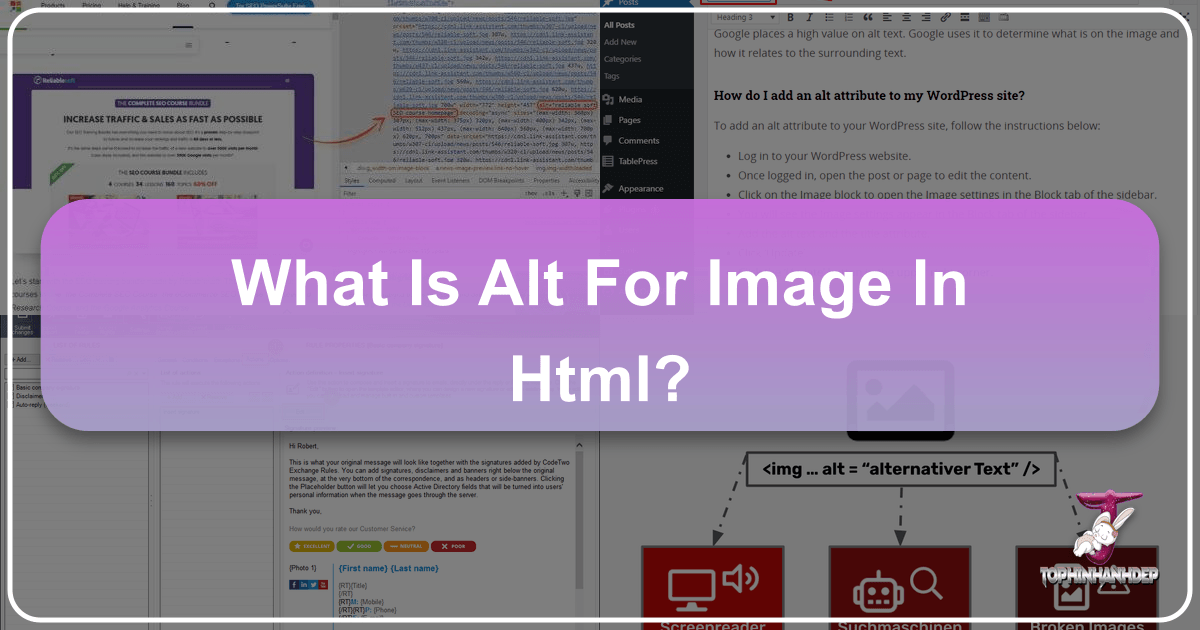
In the vast and visually driven landscape of the internet, images play an indispensable role. From captivating wallpapers and immersive backgrounds to stunning photography and intricate digital art, visuals are the cornerstone of engaging online experiences. At Tophinhanhdep.com, we pride ourselves on offering a diverse collection of high-resolution images—be it serene nature scenes, thought-provoking abstract art, or emotionally resonant photography. However, the true value and reach of these beautiful visuals extend beyond what meets the eye. This is where the often-underestimated alt attribute in HTML comes into play. Far more than just a fallback, the alt attribute is a critical component for web accessibility, search engine optimization (SEO), and ultimately, ensuring that every image on Tophinhanhdep.com serves its full purpose for every user.
The <img> tag in HTML is the fundamental element for embedding images into a webpage. While attributes like src (source) and width/height are crucial for displaying the image, the alt attribute (short for “alternative text”) is perhaps the most significant for its communicative power when the image itself cannot be rendered. It provides a textual description of the image content, offering a lifeline for users who cannot see it and invaluable context for machines that cannot interpret visual information directly. This comprehensive guide from Tophinhanhdep.com will delve into what the alt attribute is, why it’s vital, how to implement it effectively, and its broader impact on your visual content strategy.

What is an Alt Attribute?
The alt attribute is a specific attribute used within HTML image tags (<img>) to provide a text alternative for the image. Its primary function is to describe the content or function of an image when the image itself cannot be displayed to the user. This scenario can occur for several reasons: a broken image link, slow internet connection preventing the image from loading, or if the user is employing a screen reader or a text-only browser. In these instances, the alt text steps in to convey the message or context that the image was intended to provide.

Consider a high-resolution nature wallpaper from Tophinhanhdep.com depicting a serene forest scene. Without an alt attribute, if the image fails to load, a user might simply see a broken image icon. With a well-crafted alt attribute like alt="Sunlight filtering through a dense pine forest, creating dappled shadows on the forest floor", the user still receives a clear understanding of the visual content, even in its absence. This simple line of text bridges the gap between the visual and non-visual experience, affirming the principle that all content should be accessible to everyone.
The Fundamental Role in Web Structure
While the alt attribute is often referred to informally as an “alt tag,” it’s technically an attribute within the <img> tag. Its syntax is straightforward:
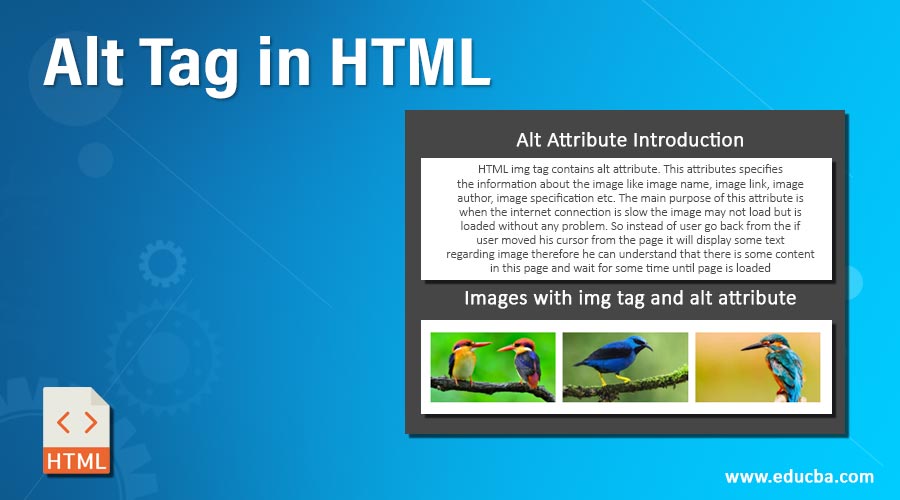
<img src="path/to/image.jpg" alt="A descriptive alternative text for the image">This textual description is distinct from other image-related elements like image titles or captions. An image title attribute typically displays as a pop-up tooltip when a user hovers their mouse over the image. Image captions, on the other hand, usually appear directly below or beside an image, providing additional context or commentary that is visible to all users. The alt text, under normal circumstances, is not directly visible to users who can see the image load successfully. Its power lies in its invisible support, stepping forward only when needed most.
The alt attribute is not exclusive to the <img> tag; it can also be used with <area> tags within image maps and with <input type="image"> for image-based form submission buttons. However, its most common and impactful application remains with standard <img> elements. Its consistent use across Tophinhanhdep.com’s vast repository of wallpapers, backgrounds, and aesthetic images ensures that our content remains robust and reliable, irrespective of browsing conditions or user capabilities.
Why is the alt Attribute Indispensable for Tophinhanhdep.com?
The strategic deployment of alt attributes transcends mere compliance; it fundamentally enhances the value and reach of Tophinhanhdep.com’s extensive image library. For a platform dedicated to providing beautiful and inspiring visual content, maximizing discovery and ensuring universal access are paramount. The alt attribute serves as a dual-purpose tool, addressing both the human need for information and the algorithmic demands of search engines.
Enhancing Web Accessibility for All Users
Accessibility is a cornerstone of responsible web design, ensuring that websites are usable by people with a wide range of abilities and disabilities. For visually impaired users, screen readers are essential tools that vocalize the content of a webpage. When a screen reader encounters an <img> tag, it relies on the alt attribute to describe what the image portrays. Without alt text, a screen reader might either skip the image entirely or, worse, read out the image file name (e.g., “IMG_45678.jpg”), which is rarely descriptive or helpful.
Imagine a user with a visual impairment browsing Tophinhanhdep.com for “sad/emotional backgrounds.” If the images are correctly tagged with alt text like alt="Silhouette of a lone figure standing by a rainy window, evoking a sense of melancholy", the screen reader can convey this profound emotional context. This allows every visitor to fully experience the nuances of our curated collections, whether they are exploring abstract art pieces, vibrant digital photography, or specific thematic collections. By prioritizing alt text, Tophinhanhdep.com ensures that our rich visual content is not just seen, but understood and felt by everyone, embodying our commitment to an inclusive user experience.
Beyond screen readers, alt text also benefits users in text-only browsers or those with slow internet connections who might otherwise miss out on valuable visual information. It’s a proactive measure to safeguard the user experience, making our platform accessible and enjoyable regardless of technical limitations.
Powering Your Image SEO and Discovery
In the competitive digital space, visibility is key. For Tophinhanhdep.com, whose core offering is visual content, appearing prominently in search engine results—especially image searches—is crucial for growth and user acquisition. This is where the alt attribute becomes a potent SEO tool. Search engine bots, while intelligent, cannot “see” images in the human sense. They rely on textual cues to understand and categorize visual content. The alt attribute provides precisely this textual context, helping search engines to:
- Understand Image Content: A descriptive
alttag tells search engines what the image is about. This enables them to index the image correctly and associate it with relevant keywords. For instance, if Tophinhanhdep.com hosts a “beautiful photography” collection featuring “high-resolution stock photos,”alttext such asalt="High-resolution stock photo of a sunrise over mountain peaks, ideal for scenic backgrounds"helps search engines understand the image’s subject matter, quality, and potential use. - Improve Image Search Rankings: When users search for images (e.g., “aesthetic wallpapers,” “nature photography 4K”), search engines consult their index of image
alttexts. Well-optimizedaltattributes containing relevant keywords significantly increase the chances of Tophinhanhdep.com’s images appearing higher in image search results, driving organic traffic directly to our site. This is particularly beneficial for our specialized content like “digital photography” and images optimized for “editing styles.” - Enhance Overall Page SEO: Images are integral to a webpage’s content. By providing
alttext, you not only optimize the image itself but also contribute to the overall SEO of the page. It provides additional keyword opportunities and reinforces the page’s topic, signaling to search engines that the page offers rich, well-described content. This comprehensive approach helps Tophinhanhdep.com rank for broader queries related to “visual design,” “graphic design,” and “creative ideas.”
Without alt attributes, Tophinhanhdep.com’s stunning collection of abstract art, inspiring photo ideas, and trending styles would be significantly harder for both users and search engines to discover. The alt attribute transforms an otherwise inaccessible or opaque visual into a meaningful piece of content that contributes to a stronger online presence.
Implementing the alt Attribute: Syntax and Best Practices
Understanding the importance of alt attributes is only the first step; effectively implementing them is where the true benefits are realized. Whether you’re a web developer, a content creator, or simply managing your personal gallery on Tophinhanhdep.com, adhering to proper syntax and best practices will ensure your images are fully optimized for accessibility and SEO.
HTML Syntax and Real-World Applications
The basic syntax for adding an alt attribute to an image in HTML is straightforward:
<img src="path/to/your-image.jpg" alt="A clear and concise description of the image content">Let’s look at examples relevant to Tophinhanhdep.com’s offerings:
-
For a high-resolution wallpaper:
<img src="https://tophinhanhdep.com/images/mountain-sunset.jpg" alt="Vibrant sunset colors over jagged mountain peaks, high-resolution desktop wallpaper">If this image fails to load, the user or screen reader will understand it’s a “Vibrant sunset colors over jagged mountain peaks, high-resolution desktop wallpaper.”
-
For an abstract art piece:
<img src="https://tophinhanhdep.com/images/geometric-abstract.png" alt="Complex blue and orange geometric abstract digital art with intersecting lines">This description provides context for a visual style that might be challenging to interpret without visual cues.
-
For a stock photo used in graphic design:
<img src="https://tophinhanhdep.com/stock/coffee-cup-desk.jpeg" alt="Overhead shot of a minimalist workspace with a steaming coffee cup and laptop, perfect for business stock photography">Here, the
alttext not only describes the image but also suggests its common application within “graphic design” or “visual design” contexts.
While the primary focus is on <img> tags, it’s worth noting that alt attributes also apply to other HTML elements that display images:
<area>tag (within image maps): Used for clickable regions in an image.<map name="productmap"> <area shape="rect" coords="0,0,50,50" href="productA.html" alt="Clickable region for Product A"> </map> <img src="products.jpg" usemap="#productmap" alt="Collection of new product images"><input type="image">(for submit buttons):<input type="image" src="submit-button.png" alt="Submit Form">
In all these cases, the alt attribute ensures that the functionality or meaning conveyed by the image is not lost if the visual content is unavailable.
Crafting Effective alt Text for Optimal Impact
Writing good alt text is an art and a science. It requires balancing descriptive accuracy with conciseness, all while keeping both users and search engines in mind. Here are Tophinhanhdep.com’s best practices for writing impactful alt attributes:
- Be Specific and Descriptive: The goal is to convey the image’s content and context. Ask yourself: If I couldn’t see this image, what text would I need to understand it? For a photo of a “beautiful photography” collection,
alt="Vibrant close-up of a dewdrop on a spiderweb at dawn"is far better thanalt="spiderweb". - Keep it Concise (but thorough): While descriptive, aim for brevity. Most recommendations suggest around 100-125 characters, as some screen readers cut off longer descriptions. Prioritize the most important details.
- Avoid Redundancy (No “Image of…” or “Picture of…”): Screen readers already announce “image” when they encounter an
<img>tag. Adding “Image of” or “Picture of” is redundant and wastes valuable character space. Just start with the description. - Incorporate Relevant Keywords Naturally: If an image is part of a “nature wallpaper” collection, naturally include terms like “nature,” “wallpaper,” “scenic,” or “landscape” if they accurately describe the image. For instance:
alt="Serene nature wallpaper of a tranquil lake reflecting autumn foliage at sunrise."This aids in SEO without being spammy. - Avoid Keyword Stuffing: This is crucial. Overloading your
alttext with a string of keywords (e.g.,alt="wallpaper background aesthetic nature abstract sad emotional beautiful photography high resolution stock photos digital photography editing styles") is detrimental to both accessibility and SEO. Search engines penalize such practices, and it creates a poor experience for screen reader users. Focus on one or two relevant keywords that flow naturally within a coherent description. - Don’t Use Images in Place of Text (Especially Headings): While not directly about
alttext, this is an important related visual design principle. If text (like a heading or critical information) is embedded within an image, it becomes inaccessible to screen readers and is not indexable by search engines. Use actual HTML text whenever possible for crucial content. - Consider the Image’s Purpose: The
alttext should reflect the image’s function on the page. Is it purely decorative? If so, an emptyalt=""might be appropriate (though generally, images should serve a purpose). Is it a call-to-action button?alt="Download our latest photo collection"would be suitable. For images demonstrating “visual design” techniques, describe the technique shown.
By following these guidelines, Tophinhanhdep.com ensures that every high-quality image, from “mood boards” to “trending styles,” is not just visually appealing but also universally accessible and optimally discoverable, reinforcing our reputation as a comprehensive resource for visual content.
The Broader Impact: alt Attributes in the Tophinhanhdep.com Ecosystem
The influence of alt attributes extends far beyond individual image tags, weaving into the very fabric of Tophinhanhdep.com’s comprehensive offerings and enhancing the entire user journey. From the sophisticated “Image Tools” we provide to the “Visual Design” principles we advocate, and the “Image Inspiration & Collections” we curate, alt text plays an integral, often unseen, role.
When users come to Tophinhanhdep.com looking for “Image Inspiration & Collections,” such as specific “photo ideas” or “thematic collections,” well-structured alt text facilitates their discovery. For example, if a user is searching for “aesthetic wallpapers featuring minimalist designs,” alt text like alt="Minimalist geometric aesthetic wallpaper with pastel color palette and clean lines" helps them find precisely what they need within our “trending styles” or curated “mood boards.” This granular level of description, driven by effective alt attributes, transforms a broad collection into a highly organized and searchable resource.
Furthermore, our suite of “Image Tools” implicitly benefits from or interacts with the concept of alt attributes. While tools like “Converters,” “Compressors,” and “Optimizers” focus on the technical aspects of image files, ensuring they are efficient and performant, alt text ensures that even the most optimized image remains understandable if it fails to load. Imagine using an “AI Upscaler” to enhance a “digital photography” piece; the resulting high-resolution image still needs a descriptive alt attribute to ensure its newfound clarity is also communicated to screen readers and search engines. The potential for “Image-to-Text” tools could even assist in generating initial alt text drafts, although human review remains crucial to ensure accuracy, context, and natural keyword integration. These tools, alongside thoughtful alt text, empower users to manage their visual assets comprehensively.
For those engaged in “Visual Design” or “Graphic Design,” the alt attribute is a non-negotiable aspect of delivering professional-grade work. Whether crafting a digital art piece, performing “photo manipulation,” or developing “creative ideas” for a client, accessibility and SEO are paramount. A graphic designer providing an image for a client’s website would fail if that image, however stunning, didn’t contribute to the site’s overall accessibility or discoverability. By instilling the habit of writing robust alt text for every visual element, Tophinhanhdep.com encourages a holistic approach to visual content creation, ensuring that beauty and functionality go hand-in-hand.
In essence, the alt attribute is a foundational element that underpins the quality and utility of Tophinhanhdep.com’s entire platform. It ensures that our commitment to “beautiful photography,” “high-resolution” images, and diverse “wallpapers” translates into an equally enriching experience for every user, regardless of their circumstances. It’s an investment in inclusivity, discoverability, and the long-term success of any visual content strategy.
Conclusion
The alt attribute for images in HTML is a small but mighty detail that holds immense power for web accessibility, search engine optimization, and overall user experience. As a cornerstone of thoughtful web development and content creation, it ensures that visual information is effectively communicated even when images cannot be displayed, bridging critical gaps for users with visual impairments and providing invaluable context for search engine crawlers.
At Tophinhanhdep.com, our mission is to provide an unparalleled library of stunning images—from captivating “wallpapers” and “backgrounds” to diverse “aesthetic,” “nature,” “abstract,” “sad/emotional,” and “beautiful photography” collections. Through the diligent application of well-crafted alt attributes, we ensure that every single “high-resolution” image, “stock photo,” or piece of “digital photography” is discoverable, accessible, and meaningful to every visitor. This commitment extends to supporting “visual design,” “graphic design,” and fostering “image inspiration” through intelligently tagged content.
By embracing best practices for alt text—being descriptive yet concise, avoiding redundancy and keyword stuffing, and prioritizing user understanding—we not only enhance the discoverability of our “thematic collections” and “trending styles” but also uphold the fundamental principle of an inclusive internet. The alt attribute is not merely a technical requirement; it is a testament to quality, care, and a holistic approach to presenting visual content effectively in the digital age. For anyone creating or consuming visual content online, understanding and utilizing the alt attribute is an essential step towards a richer, more accessible, and more discoverable web.